Sustainability of food production and consumption [Essay written July 2019]
Case study: Collapse – The great leap forward
Introduction:
The great leap forward (TGLF) was a large-scale example of multiple failures within a societal system, that inevitably contributed to a collapse of that system and resulted in the largest ever human death toll from famine and subsequent reorganization of that system. This can teach us many lessons about poor human-system structure design and sustainable food production, which we can apply to the current challenges of human-induced climate change and the threat of human extinction. The first section describes the many failings of TGLF policies, leadership and resulting consequences. The second section describes a proposed framework for human civilization which includes large sets of variables of beneficial and detrimental factors possible in the system. The variables and descriptors in the tables are split between suggested favorable (normal text) and unfavorable (underlined text) characteristics of human systems. Those which are in bold text are highlighted as factors, which if favorable, were not present or poorly represented in policies during TGLF; if unfavorable, they were present during TGLF or potential causes of this human tragedy.
Section 1 – The Great Leap Forward:
The great leap forward (TGLF) was a campaign in China led by the communist party chairman Mao Zedong from 1958, up to its abolishment in 1961. The aim was to transform China from an agrarian society to a highly industrialized nation by increasing rural grain output through collectivization to support industrial operations. Systemic failures in central planning, among other factors, contributed to the catastrophic consequences of the campaign policies.
In 1958 the government amalgamated smaller agricultural collectives, many which were formed over the previous decade, into larger cooperative communes of thousands of households in a process of collectivization. Expecting large gains in grain output, much rural labour was diverted to industrial programmes. These were likely the more productive of the agricultural workforce and left less productive members to produce grain. This saw neglect of chores and resulted in large portions of harvests being left to rot in the fields (li & Yang,2005). This had reduced grain production by 1959.
Grain procurement from the cooperatives was based on statistics provided by local officials but due to statistical gamesmanship, encouraged them to exaggerate and falsify crop yield figures. These figures were used to determine the quota of grain procured from cooperatives for the urban and industrial workforce populations. For example, a harvest was reported at 230,280 tons when its true amount was 88,392 tons which saw the quota procured at 75,500 tons (Becker, 1996). This left inadequate food supplies for the rural workers and malnutrition and starvation set in. This led to a limiting of physical capacity of the workers to carry out manual labour and further reduced grain output.
Meteorological data from the time shows that bad weather exacerbated these issues (Kueh, 1995). These factors together caused widespread famine in the rural regions by 1960 and premature deaths during TGLF campaign due to starvation are estimated at between 16.5 and 30 million (Coale,1981; Barister,1987). The government operated under a closed economy and did not request or accept international aid.
An analysis by (Li & Yang,2005) estimated that diversion of resources from agriculture is responsible for 33% of the collapse of grain output between 1958 and 1961; excessive procurement of grain 28.3% responsible and adverse weather conditions responsible for 12.9% of the collapse. This makes the catastrophe of TGLF famine unique as it was mainly due to a failure of central planning.
Many human rights abuses were documented in accounts from the time, the first of which included the deprivation of the right of commune members to exit them (Lin, 1990). People were beaten and violently forced to work, even in a malnourished and sick state (Dikotter,2010). Around 6-8% of deaths during TGLF are attributed to those tortured to death and murdered (Becker, 2010).
Sustainable food production:
A sustainable food system has many definitions from many sources, but it is generally built on the principles that support the ecological, social and economic values of a community region. These systems are described as being secure, efficient, healthy, safe, environmentally friendly, conservation oriented, organic and they preserve biodiversity and recycle waste (Potukuchi & Kaufman,1999).
Collectivization in principle could be a self-sufficient and sustainable food production method if planned and managed carefully but there are many factors of human nature that are difficult to plan for. Another example of the failure of collectivization was the soviet union’s attempt in 1928 to 1940 which also resulted in great famine (Mccauley,2013). This does suggest that it is a risky food production model and if it were to be used in the future to create a more sustainable in civilization, it would require great thought and planning.
Successful, smaller scale models of self-sufficient, sustainable food production and farming have been proven to work well across the globe. These include the Amish and Mennonites, the Israeli Kibbutz, traditional rural communities, intentional communities, civic agriculture, homesteading and tropical fruit orchard ownership. Some details of these styles of self-sufficient and in some cases off-grid living are given in table 1.
Table 1: Examples of food self-sufficient lifestyles from around the world
| Amish and mennonite: These religious people shun most electrically powered devices and other modern conveniences and pride themselves on working hard. Items generally disallowed from use include cars, tractors, propane gas, refrigerators and inside flush toilets. Many do allow the use of motorized washing machines though. Some mennonite orders allow the use of cars, electricity, phones and computers. They farm their own foods and can and pickle produce as a way of preserving the harvest. |
| Kibbutz: A kibbutz is generally based on a collective community ideal which focuses mainly on agriculture. A hard work ethic in cultivating the land is the main feature which also makes them food self-sufficient. They most often subscribe to an ideology of equality which was originally in the form of socialism. |
| Traditional rural communities: Many rural communities around the world still operate without a connection to the electrical grid and some that have electricity still use the traditional tools and methods of food production, cooking and storing. Using firewood to cook on stoves, in ovens or over open fires is essential to their lifestyle. Home preservation with oils, alcohols and fermentation is used to extend the lifetime of the harvest. |
| Intentional community: Typical values of such groups include self-sufficiency, simplicity and minimalism, sustainability and communal living. |
| Civic agriculture: Agriculture is viewed as the responsibility of an entire community and it connects the farmer to the community through a social connection. The sustainability of this type of rural agriculture is a central value which aims to create a self-sustainable local economy. |
| Homesteading: The lifestyle is one of subsistence farming and self-sufficiency but is different from communal types of living as it is more of an individual or family approach. It involves home preservation of foods such as canning, pickling, drying and traditional forms of storing produce. Modern homesteading often uses renewable technology to power their homes with solar and wind power. |
| Tropical fruit orchard ownership: Tropical fruit orchards provide an ideal form of subsistence farming as fresh, high nutrient fruits are optimal for our health. It is possible to thrive on a largely raw, plant-based diet with a high fruit sugar content. Limited by their geographical location requiring at least sub-tropical warmth and fertile soils to grow in, they are only viable closer to equatorial regions. |
Section 2 -The System of Civilization and Understanding Collapse:
To prevent collapse of a system it is helpful to first understand how the system works. The scientific method requires that a list of all essential variables is made and global systems science views these interacting variables as part of systems.
Here we introduce a way of arranging the main variables to describe this system using a set of geometric polyhedra known as the nested platonic solids (image 1). This allows us to display not only the connections found in the system but also the symmetries of the system, which is not an unexpected finding since symmetries are replete in physics of the universe and nature.
It is suggested in (Partidarlo,2011), as part of a resilience strategy, that a socioecological system thinking is needed to understand cross-scale interactions, interdependencies and dynamics of civilization. It seems prudent to establish a sustainable model for civilization which takes into account a reasonably large set of variables that would be comprehensive enough to address the most urgent problems within our systems. A draft outline of this effort is described, which we title the Planetarian Framework of Modern Civilization, in the hope that it may prove useful for other researchers working on this problem and to better understand and prevent the collapse of systems.
The Planetarian Framework of Modern Civilization:
This framework is a matrix consisting of the five nested platonic solids and their inspheres, plus a central origin. An example of the nested platonic solids is shown in image 1. The individual solids are shown in image 2 and their inspheres shown in image 3. These are used to describe the system of modern civilization with each 3D geometric shape corresponding to a collection of features of the system which share commonalities. The entire system is split into three units forming the baseline rules, the system input and the system output. Each geometric shape forms a subunit of the system with each vertex representing a node which describes a specific factor of the system.
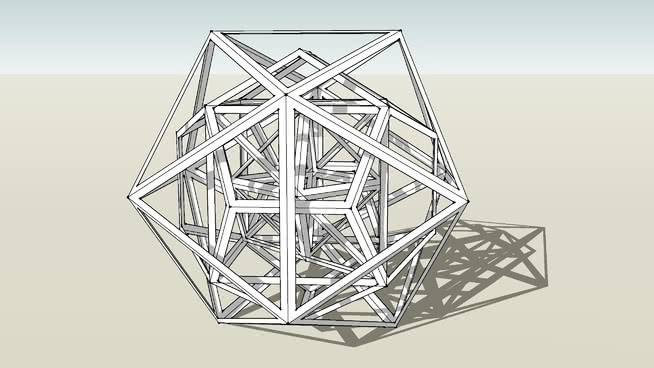
Image 1: A 3-dimensional depiction of the nested Platonic solids (Jbacus,2014)
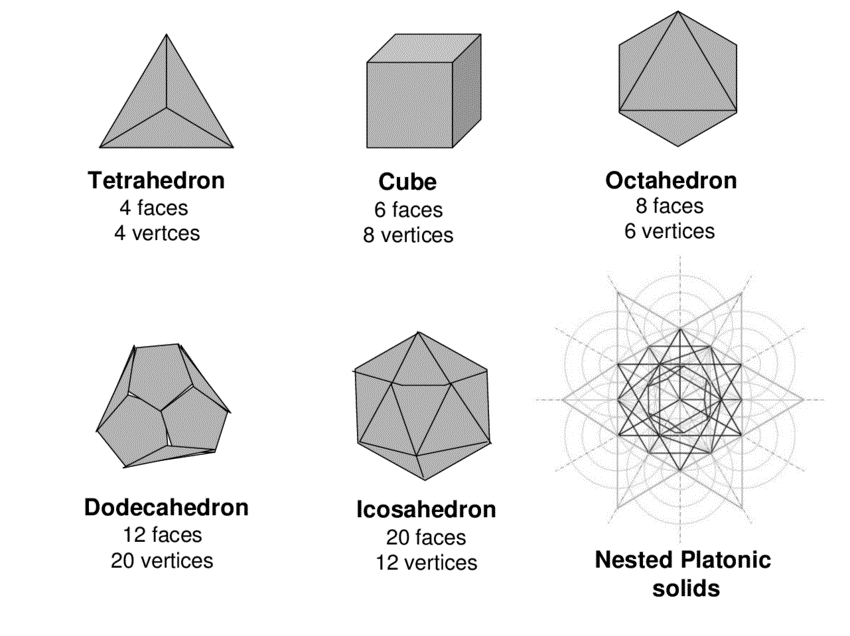
Image 2: The platonic solids and their face and vertex numbers (Drummyfish,2019)
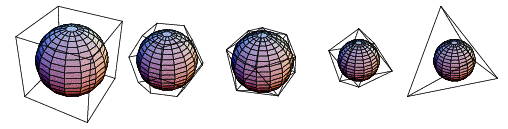
Image 3: The platonic solids and their inspheres. From left to right subunits G and F (sphere 3), I and H (sphere 4), K and J (sphere 5), C and B (sphere 1) and one tetrahedron of subunit E with subunit D (sphere 2). (Weisstein,2004)
We theorize that each of the subunits might require a complete unified-theory for each of the fields, to fully understand how to construct a long-term stable civilization. The scientific method requires us to determine each field’s fundamental first principles to understand the subject including its symmetries and interconnections. The inspheres pertain more to philosophies, thoughts, emotions, decisions, knowledge, rules and agreements whereas the platonic solids deal more with actions, interactions and systems.
Each of these subunits which form the main units of the system are listed in table 2 with the alphabetic designations for the units shown.
TABLE 2: The units, subunits and adjuncts of the Planetarian framework
| Unit | Subunit designation | Geometric representation | Subunit of framework described | System Units and Adjuncts description |
| Primary | 01 | Centroid | The laws of Physics | System Rules |
| Primary | 00 | Sphere 0 | The meaning of life | System Rules |
| Primary | A | Icosahedron 1 | The rules of power | System Rules |
| Primary | B | Sphere 1 | Human philosophy | System Rules |
| Primary | C | Octahedron | Fundamental Human and Natural systems | System Rules |
| Secondary | D | Sphere 2 | Human rights and Human nature | System Input – Self interaction – adjunct 1a |
| Secondary | E | Stellated Octahedron (merkaba) | The human condition – Interrelational tendencies | System Input – Self interaction – adjunct 1b |
| Secondary | F | Sphere 3 | Human beings and Personal actions | System Input – Individual humans – adjunct 2a |
| Secondary | G | Cube | The human experience and lifecycles | System Input – Individual humans – adjunct 2b |
| Tertiary | H | Sphere 4 | Rules for Civilization design and structure | System Output |
| Tertiary | I | Dodecahedron | Core system components of civilization | System Output |
| Tertiary | J | Sphere 5 | Information used to determine international agreements on action, resource use and allocation | System Output |
| Tertiary | K | Icosahedron 2 | Human systems and the environment | System Output |
We consider the centroid of the framework to represent the laws of physics as rules upon which the universe operates and allows life and nature to exist. An icosahedron inscribed in an octahedron as shown in image 4 is used to represent the rules of power. The icosahedron san be split into two halves of 6 vertices each which form a pentagonal arrangement of triangles. Each vertex of these halves can be paired with a vertex on the opposite half which are described in table 2.
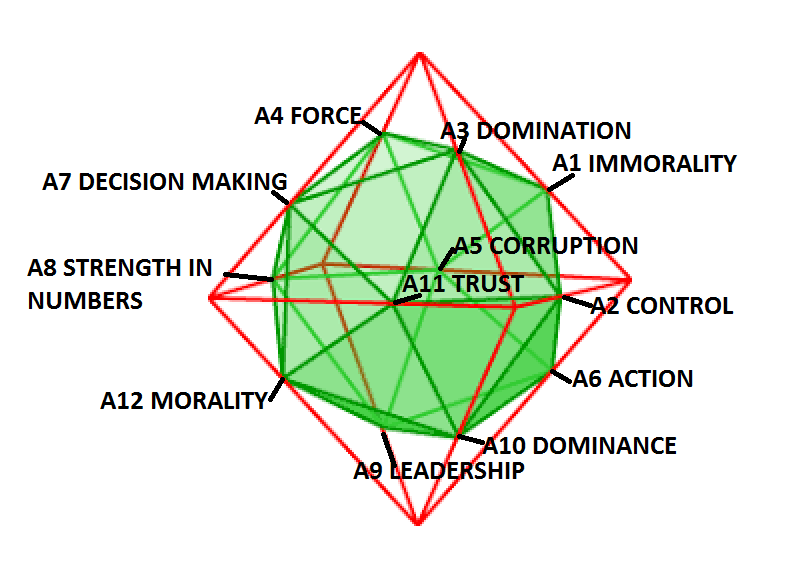
Image 4: A nested icosahedron inside an octahedron showing the nodes of subunit A representing power dualities (Adapted from Scott,2007)
Table 3: The dual pairs of nodes of subunit A, the icosahedron, which represents the rules of power
| Pairs of Variables of the Rules of Power | |
| A12 Morality: Needs of the many, Selflessness, Survival, Security, Safety, Compassion, Honour | A1 Immorality: Self interest, Desire, Greed, Ego, Common interest, Agenda, Fear, Hatred |
| A8 Strength in Numbers: Alliances, Resources, Provision, Access | A2 Control: Acquisition, Stealing, Lobbying, Manipulation |
| A9 Leadership: Authority, Credibility, Reputation, Experience | A3 Domination: Tyranny, Ownership, Oppression, Dictatorship, Slavery, Subjugation |
| A10 Dominance: Natural order, Strength, Skill, Tactics, Instinct | A4 Force: Weapons, Threats, Blackmail, Intimidation, Coercion, Bribery |
| A11 Trust: Information, Intelligence, Diplomacy, Cooperation, Persuasion, Truth, Knowledge | A5 Corruption: Anonymity, Secrecy, Lies, Exclusivity, Organised crime |
| A7 Decision Making: Planning, Timing, Foresight | A6 Action: Bravery, Risk, Boldness, Confidence |
Sphere 0 sits inside this first icosahedron and includes the very meaning of life and the directive individual humans seek out and apply in their actions throughout life. Sphere 1 (image 3) sits inside the octahedron in this framework and includes the philosophical considerations of humanity, life and existence as listed in table 2.
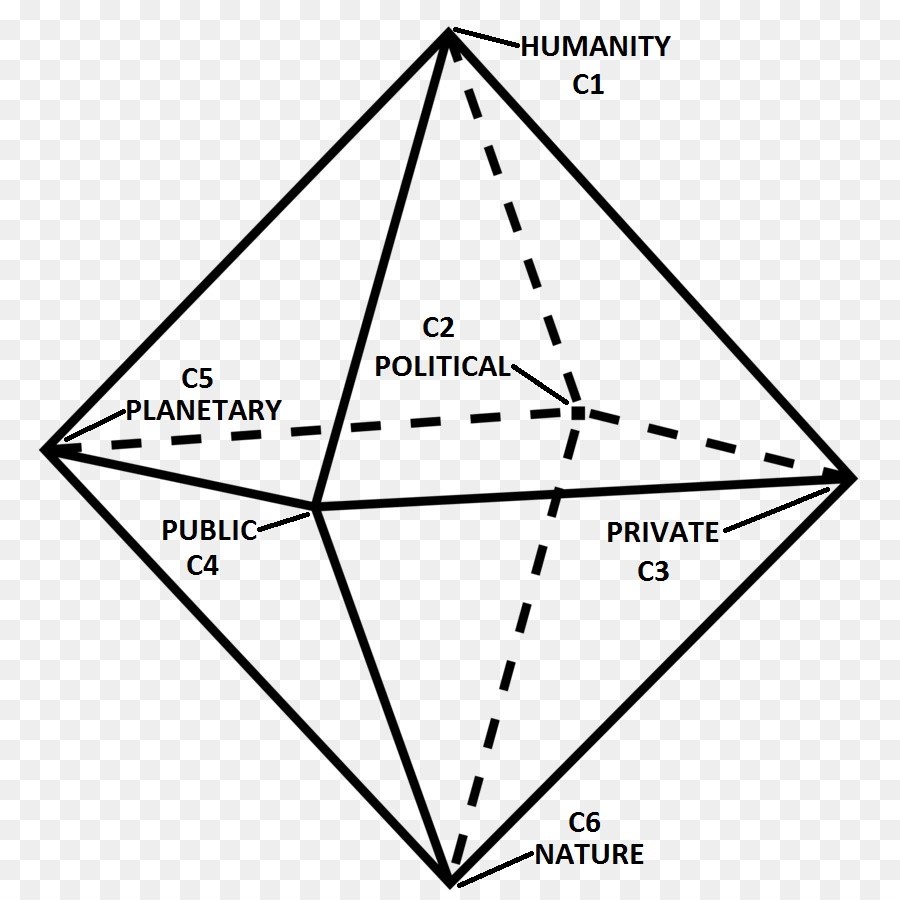
Image 5: Subunit C of the Planetarian framework modelled on an octahedron with vertices representing nodes of the system. This shows the fundamental human and natural systems (adapted from Aelshwa,2019)
We use the vertices of the octahedron to describe the fundamental components of human civilization and nature. The nodes of the octahedron are shown in image 5. The alphanumeric designations and some of the features of this primary unit are given in table 4.
TABLE 4: The designations and descriptions of the subunits of the primary unit of the system excluding the central origin (the laws of physics)
| Node designations | Systems, Actions and/or Interests | Factors and variables |
| 00 | Meanings to life | Purpose and life mission – Procreation, discovery, progress, goals Meaning – truth and knowledge understanding and discovery Joy, Happiness, Pleasure Love Victory, Glory Adventure Power (for good or bad) Brain chemicals – All the aforementioned are essentially governed by release of brain chemicals dopamine, serotonin, oxytocin etc. |
| B | Philosophical | Religion, Faith and spirituality, Consciousness, Sentience, Respect for life and earth, Knowledge and understanding, Ethics and values, Morality, Equality, Diversity, Tolerance, Gender roles, Truth, Inclusivity, Humanitarianism, Meaning of life, The limiting of suffering, Logocracy, Meritocracy, Technocracy, Noocracy Nihilism, Immorality, Apathy, Evil |
| C1 | Humanity | Evolution, Evolution of the brain, Human history, Population, Tribalism, Kinmanship, Territory, Villages, Towns, Cities, States, Countries, Continents, Country alliances, Authority, Power, Organisation, Order, Language, Nationality, Revolution Crimes against humanity, Fascism, Autocracy, Terrorism, Genocide, War, Despotism, Tyranny, Authoritarianism, Ultranationalism, Dictatorship, Totalitarian, Corruption, Mafia, Organised crime, Imperialism, Oligarchy, Dystopia, Stealing from the planet and people present and future |
| C2 | Political | Governance, Military, Intelligence agencies, International relations, Immigration, International travel, Democracy, National stability, Food security, Social provision, Diplomacy, Infrastructure, Public investment, Taxation, Cybersecurity, Food and goods distribution, Greenhouse gas emissions oversight Military-Industrial complex, Threat of nuclear war, Pathocracy, Conflict, Confrontation, National instability, Food insecurity, Social deprivation, Poverty, International tensions, Propaganda |
| C3 | Private | Consumerism, Business, Economy, Financial services, Goods and services, Capital, Labour, Industry, Trade and exchange, Transactions, Stock market, Investment, Retail, Travel and tourism, Technology and research, Property and land ownership, Wealth, Money, Pleasure, Entertainment, The news and media, Advertisement, Construction, Clothing and textiles Overproduction, Non-recyclable goods and materials, Profit before planet, Indefinite growth model, Unregulated Capitalism, Slave labour, Renting model, Wealth inequality, Exploitation of people, nations and planetary resources, Tax avoidance, Biased news, Media misinformation, Monopolies, Lobbyist groups, Greenhouse gas emissions, ‘Big Pharma’, Neglecting that prevention is better than cure in healthcare, ‘Big Food’, Fossil fuel industry |
| C4 | Public | Education, Institutions, Employment, Housing, Transport, Water, Sanitation, Recycling and waste, Agriculture, Pensions and welfare, Law and justice, Security, Healthcare, Medicine, Administration, The commons, Leisure, Energy, Scientific research, Culture, Citizen support, Demographics, Socio economics, Communication, The internet, Civil rights Poor work-life balance, Poor life education, Inadequate housing and services, Intensive agriculture, Animal agriculture, Perversion of justice, Poisons in food and water, Industry regulation, Injustice |
| C5 | Planetary | Sustainability, Natural resources, Biosphere, Atmosphere, Cryosphere, Hydrosphere, Geosphere, Oceans, Globalism, Global governance, Civilization, Abundance, Conservation, Regeneration Deforestation, Biosphere destruction on land and in oceans, Human induced climate change, Environmental and economic collapse, Human and other life extinction, Pollution |
| C6 | Nature | Plants, Animals, Forests, Marine life, Food chains, Food webs, Predators, Prey, Natural habitats Species extinction, Poaching, Overfishing, Destruction of habitats and ecosystems |
The secondary unit describes the input of the system and is comprised of two sets of two adjunct units which as pairs describe the input itself (human beings) and how this system input interacts with itself (human interactions). This is represented by a stellated octahedron (commonly referred to as a merkaba) formed from two tetrahedrons and together are nested inside of a cube plus two inspheres, one for each polyhedron. This structure, excluding the inspheres, is shown in image 6 which also shows the octahedron from the primary unit.
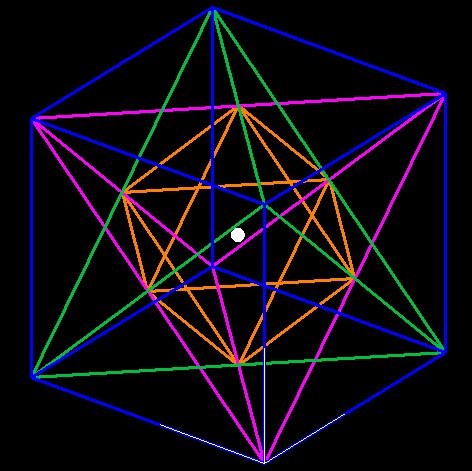
Image 6: The nested platonic solids of the octagon, stellated octahedron (merkaba) and a cube. The cube is blue with two interlocking tetrahedrons, one in purple and the other in green. The intersection of the two tetrahedrons forms an octahedron, in orange. (kjmaclean,2013)
Sphere 2 is the inscribed sphere of the merkaba and describes the set of variables of human nature including human rights and personal characteristics which are listed in table 5.
TABLE 5: The factors and variables of subunits D and F (sphere 2 and 3 respectively)
| Subunit adjunct designation | Subunit Title | Factors and Variables |
| Sphere 2 – D1a | Human rights and human nature | Human rights: Marriage and family, Right to own things, Freedom of thought, Freedom of expression, Public assembly, Choice to join a group cannot be forced upon people, Democracy, Social security, Workers rights, Right to play, Food and shelter for all, Education, Copyright, Fair and free world, Responsibility, No one can take away your human rights. Human nature: Sapience – Intelligence, Creativity, Wisdom, Automatic thinking. Competition, Impulse control, Logic, Reason, Imagination, Problem solving, Rationality, Emotions, Patience, Dignity, Grace, Courage, Passion, Integrity, Humility, Diligence, Temperance, Objectivity, Impartiality, Prudence, Optimism, Pragmatism, Flexibility, Resilience, Adaptability, Empowerment, Vision, Joy, Happiness, Bullying, Gangstalking, Harassment, Hacking, Cybercrime, Crime, Pathological competition, Irrationality, Nepotism, Cronyism, Acquisition and Control, Hatred, Jealousy, Intolerance, Ego, Ignorance, Fear, Oppression, Abuse of power, Control, Lack of respect, Racism, Persecution, Lies, Evil, Cowardice, Subjugation, Elitism, Privilege |
| Sphere 3 – F1a | Human beings and personal actions | Protected characteristics under human rights: Age, Disability, Gender, Marriage and civil partnership, Pregnancy and maternity, Race, Religion or belief, Sex, Sexual orientation. Personal: Psychology, Baseline brain chemistry profile, Perceptions and preferences, Reproduction, Sex, Diet, Lifestyle, Consumption, Mental wellness, Education, IQ, Life education, Self-expression, Personality, Self-esteem, Art, Transparency, Accountability, Responsibility, Long-term thinking, Purpose, Adventure, Victory, Glory, Self-love, Identity, Authenticity, Principles, Perseverance, Strength, Self-actualisation, Vitality, Ambition, Reliability, Credibility, Emotionality, Selflessness With others: Friendship, Community, Human connection, Love, Compassion, Fairness, Empathy, EQ, Forgiveness, Support, Consideration for others, Nurturing, Sympathy, Altruism, Trust, Cooperation The Dark Tetrad – Sociopathy, Psychopathy, Machiavellianism, Sadism, Narcissism Ponerology, Illness, Stress, Overconsumption, Waste, Addiction, Coercion, Intimidation, Denial, Lust, Gluttony, Greed, Sloth, Wrath, Pride, Prejudice, Selfishness, Neglect, Resistance, Inflicting Suffering, Radicalism, Extremism, Racism, Sex trafficking, Overpopulation |
The merkaba is used to describe the human condition, more specifically the major interrelational tendencies between people and groups of people which demonstrate diametrically opposed world views. This forms a basis for a unified theory of psychology which was inspired as a 3D adaptation of the personality disorder star (Henriques,2018) which describes actions of individuals to be of moving towards, away or against others. We have added a fourth action of acting for others. The nodes of the merkaba subunit (subunit E or adjunct 1b) are shown in image 7 and their designations and descriptions described in table 6.
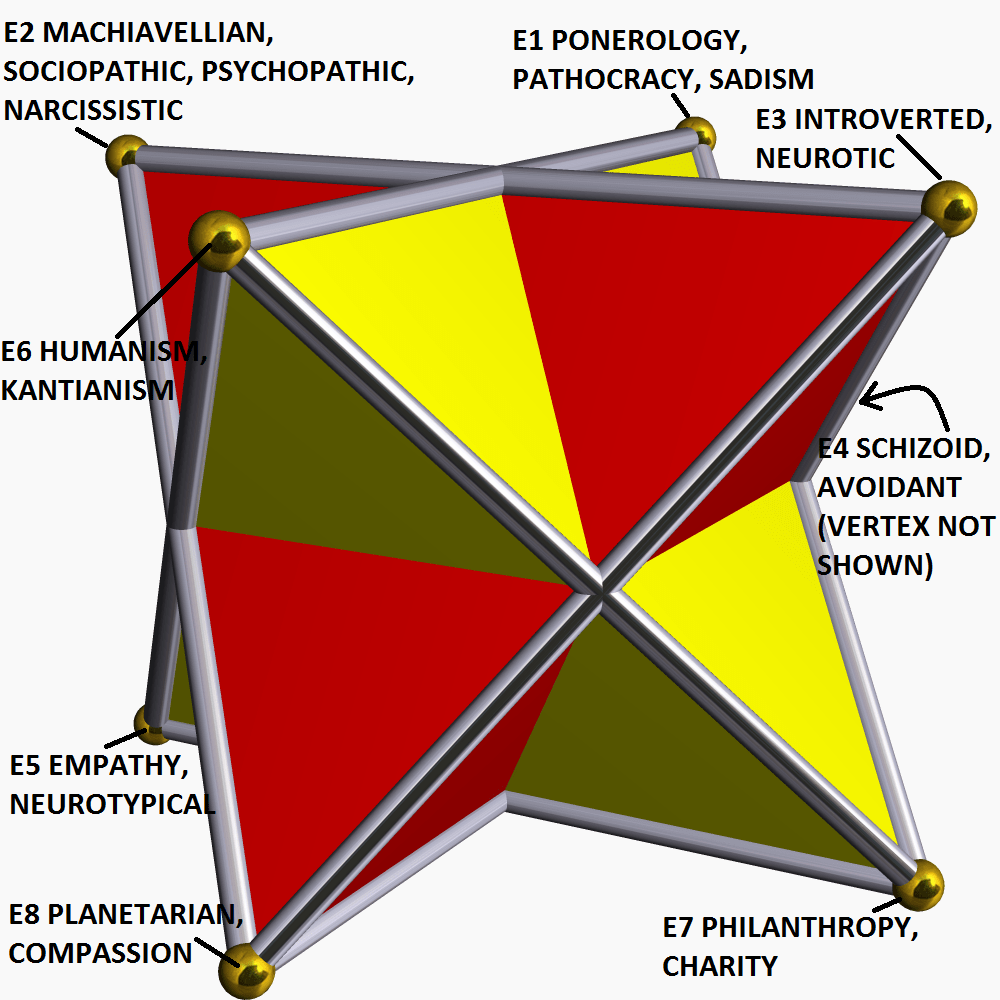
Image 7: The node designations and descriptors of subunit E (the merkaba), adjunct 1b, of the Planetarian framework. It describes the interrelational tendencies of humans and facets of the human condition (adapted from Tomruen,2006)
TABLE 6: Node designations, descriptors and descriptions of subunit E (the merkaba), adjunct 1b.
| Subunit node designation | Action direction | Node Descriptors | Description |
| E8 | For Everyone | Planetarian, Compassion | Planetarian: Defined as a noun to mean an inhabitant of a planet or as a member of staff of a planetarium. It is also informally known to describe a diet which seeks to limit environmental impact such as eating locally grown produce. But we seek here to extend the definition of the word planetarian to include an adjective form which can extend to all human actions where the primary consideration is that of the planet and its inhabitants. Thus we name the model we describe here as being planetarian as it is an effort to preserve humanity and earth. Examples may include a planetarian diet, lifestyle, economy, agriculture, technology, industry, resource use etc. Compassion: Concern for the sufferings or misfortunes of others |
| E7 | For Others | Philanthropy, Charity | Philanthropy: The desire to promote the welfare of others, particularly through generous donation. Charity: An organization or action which is the voluntary aid given to those in need and promote social well being. |
| E6 | Towards Everyone | Humanism, Kantianism | Humanism: A philosophical and ethical stance that emphasises the value and agency of human beings, individually and collectively. It favours critical thinking and evidence rather than dogma or superstition. Kantianism: A branch of philosophy developed by Immanuel Kant who believed that rational beings have dignity and should be respected. |
| E5 | Towards Others | Empathy, Neurotypical | Empathy: The ability to understand and share the feelings of others. Neurotypical: A person that is unaffected by a developmental or personality disorder. Generally considered to form the majority of the population that possess a healthy functioning and well formed brain and brain chemistry baseline profile. |
| E4 | Away from everyone | Schizoid, Avoidant | Schizoid: A personality disorder characterized by an indifference to social relationships which includes social and emotional detachments. Avoidant: A personality or behaviour which avoids intimacy or social interaction. |
| E3 | Away from others | Anxiety, Neurotic | Anxiety: Feelings of worry, nervousness or unease about something with an uncertain outcome. Neurotic: A person that is preoccupied with worried thoughts and may be more fearful in social settings. |
| E2 | Against others | Antisocial personality disorders(ASPD): Machiavellian, Psychopathic, Sociopathic, Narcissistic | ASPD: All show a lack of empathy, conscience, guilt and remorse. Machiavellian: Cynical detached worldview. Manipulativeness. Amorality. Callousness. Strategic and calculating behaviour. Psychopathic: Glibness. Callousness. Proneness to boredom. Egocentricity. Impulsivity. Irresponsibility. Shallow emotions. Pathological lying. Manipulativeness. Violation of social norms and expectations. Potentially aggressive and violent. Emotional hyporesponsivity. Sociopathic: Emotional Dysregulation. Extreme jealousy. Ideation around killing specific individuals. Instigation and engagement of bullying and “gangstalking” victims. Narcissistic: Grandiosity. Sense of entitlement. Exploitative interpersonal style. Self-promoting behaviour for ego reinforcement. |
| E1 | Against Everyone | Ponerology, Pathocracy, Sadism | Ponerology: The theory that large-scale evil is orchestrated by groups led by individuals with various psychological defects such as ASPD (Lobaczewski,2006). They are posited to form networks of mutual pathological conspiracies that act at every social scale which spares no nation. Pathocracy: This ponerology process is theorised to form a pathocracy of governance which is akin to a “double government” (Glennon,2014) or “deep state” commonly mentioned in relatively recent media (Goldsmith,2018). Its chief components are purported to form elements of government, top-level finance, industry, intelligence services, military, security, judiciary and organised crime (Jessop,2015; Marcus,1969; Baker,2017; Cangemi & Pfohl,2009). This psychopathic network actively works on common collusions partially estranged from normal society (Lobaczewski,2006). Sadism: Cruel and vicious behaviour. Humiliation and hurting others to assert dominance or for pleasure. |
Sphere 3 is the inscribed sphere of the cube (subunit F, adjunct 2a) and describes the set of variables of human beings themselves and includes personal thoughts, emotions and actions which are listed in table 3. The cube (subunit G, adjunct 2b) represents the human experience and lifecycle which also has parallels of the cycles of other systems. The nodes of this subunit are shown in image 8 (cube) and again shows the dualities and symmetries which align with those of the other nested shapes. Description and alphanumeric designations of these nodes are given in table 7.
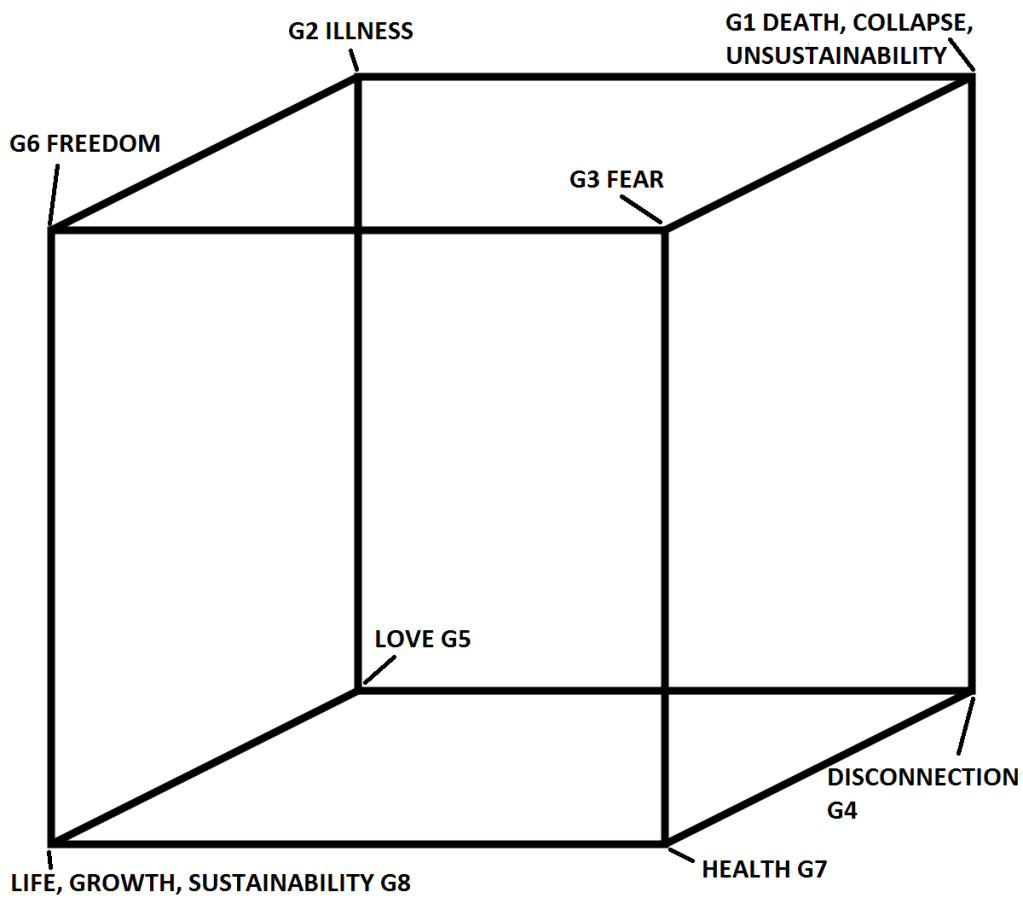
Image 8: The node designations and descriptors or subunit G of the Planetarian framework represented by the cube (adapted from Benfrantzdale,2007)
TABLE 7: : The node designations and descriptors or subunit G, adjunct 2b
| Subunit designation | Node Descriptors |
| G8 | Life, Growth, Sustainability |
| G7 | Health |
| G6 | Freedom |
| G5 | Love |
| G4 | Disconnection |
| G3 | Fear |
| G2 | Illness |
| G1 | Death, Collapse, Unsustainability |
The tertiary unit of the system comprises a nested dodecahedron inside an icosahedron each with an insphere. The cube shares nodes with the dodecahedron as shown in image 9 and the dodecahedron is nested in the icosahedron as shown in image 10.
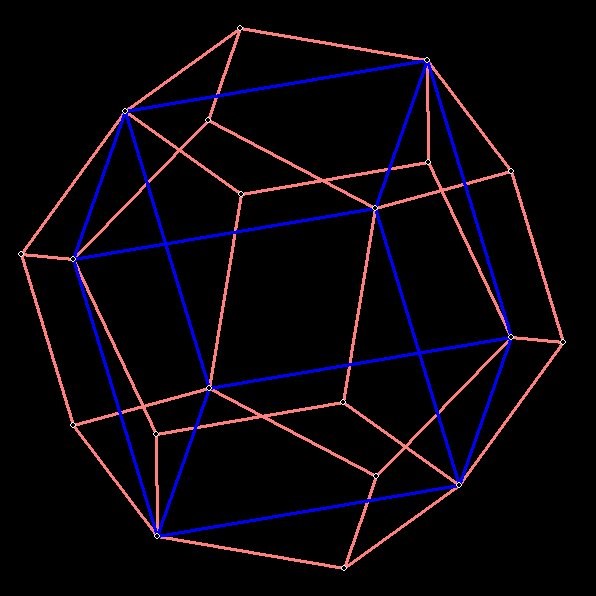
Image 9: A cube nested inside of a dodecahedron (kjmaclean,2013)
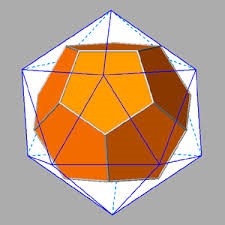
Image 10: A dodecahedron nested inside of an icosahedron representing the tertiary unit of the Planetarian framework (Zefiro,2008)
Sphere 4 describes the knowledge about the rules for creating the design and structure for a sustainable civilization. The dodecahedron describes the core system components of civilization and the icosahedron describes the large-scale systems of humanity and the environment. Since the dodechedron is a dual of the icosahedron, because they have the opposite number of vertices and faces, the pentagonal faces of the dodecahedron can be used to represent the vertices of the icosahedron which sit above the dodecahedron face centres. The same is true of the faces of the icosahedron which can be used to represent where the faces of the dodecahedron intersect at a vertex. The nodes of the corresponding dual are shown in images 11 and 12 with the alphanumeric designations for the dodecahedron and icosahedron nodes listed in tables 8 and 9, respectively.
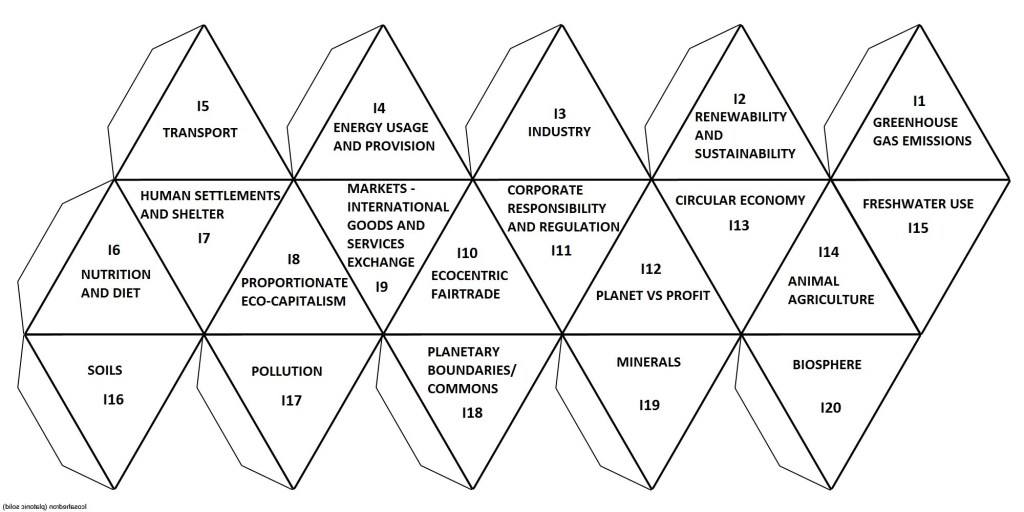
Image 11: The node designations and descriptors of subunit I which is represented by the dodecahedron but the faces of an icosahedron net are used here to represent the vertices of the dodecahedron. This subunit describes core system components of civilization (adapted from Pixelmaniac,2014)
TABLE 8: The node designations and descriptors of subunit I (dodecahedron)
| Subunit Node Designations | Descriptors |
| I1 | Greenhouse Gas Emissions |
| I2 | Renewability and Sustainability |
| I3 | Industry |
| I4 | Energy Usage and Provision |
| I5 | Transport |
| I6 | Nutrition and Diet |
| I7 | Human Settlements and Shelter |
| I8 | Proportionate Eco-capitalism |
| I8 | Markets – International Goods and Services Exchange |
| I10 | Ecocentric Fairtrade |
| I11 | Corporate Responsibility and Regulation |
| I12 | Planet VS Profit |
| I13 | Circular Economy |
| I14 | Animal Agriculture |
| I15 | Freshwater Use |
| I16 | Soils |
| I17 | Pollution |
| I18 | Planetary Boundaries/ Commons |
| I19 | Minerals |
| I20 | Biosphere |
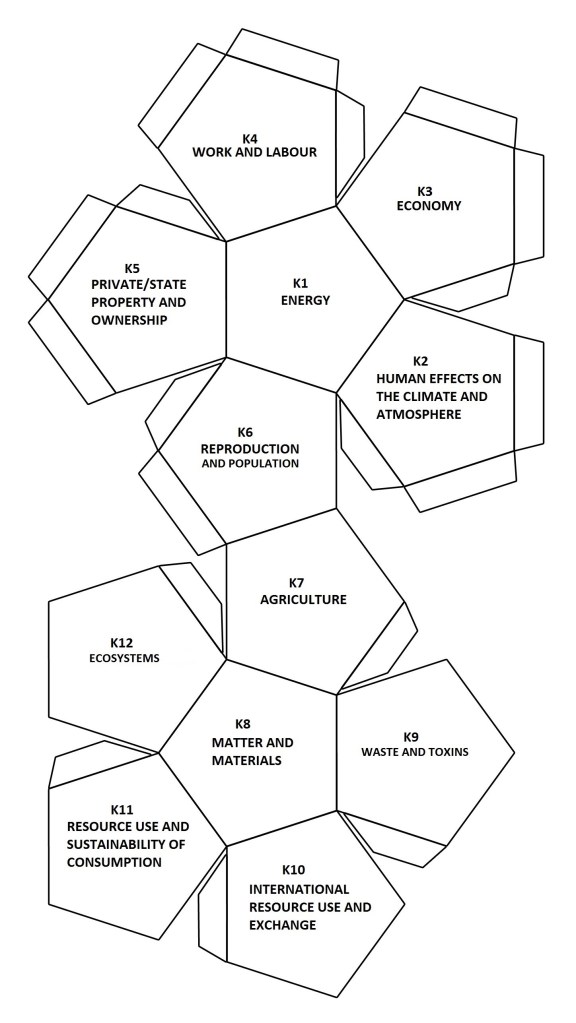
Image 12: The node designations and descriptors of subunit K which is represented by the icosahedron but the faces of a dodecahedron net are used here to represent the vertices of the icosahedron. This subunit describes the large scale systems of humanity and the environment. (adapted from Pixelmaniac,2014)
TABLE 9: The node designations and descriptors of subunit K (icosahedron)
| Subunit Node Designations | Descriptors |
| K1 | Energy |
| K2 | Human Effects on the Climate and Atmosphere |
| K3 | Economy |
| K4 | Work and Labour |
| K5 | Private/State Property and Ownership |
| K6 | Reproduction and Population |
| K7 | Agriculture |
| K8 | Matter and Materials |
| K9 | Waste and Toxins |
| K10 | International Resource Use and Exchange |
| K11 | Resource use and Sustainability of Consumption |
| K12 | Ecosystems |
Sphere 5 sits inside the icosahedron and is a set of variables which form a baseline from which the international agreements on the allowed use of resources are determined. Details about the variables contained in spheres 4 and 5 are omitted here as this information is largely yet to be determined by our current civilization.
It is interesting to note that the cube, merkaba and dodecahedron each share a node of the nested solids and their representations and designations in the framework are listed in table 10 for comparison.
TABLE 10: A list of nodes which share the same coordinates within the nested platonic solids
| Shared nodes | Merkaba | Cube | Dodecahedron |
| E8, G8, I2 | Planetarian, Compassion | Life, Growth, Sustainability | Renewability and Sustainability |
| E7, G7, I4 | Philanthropy, Charity | Health | Energy Usage and Provision |
| E6, G6, I7 | Humanism, Kantianism | Freedom | Human settlements and Shelter |
| E5, G5, I15 | Empathy, Neurotypical | Love | Freshwater Use |
| E4, G4, I10 | Schizoid, Avoidant | Disconnection | Ecocentric Fairtrade |
| E3. G3, I12 | Introverted, Neurotic | Fear | Planet vs profit |
| E2, G2, I17 | Machiavellian, Sociopathic, Psychopathic | Illness | Pollution |
| E1, G1, I20 | Pathocracy, Ponerology, Sadism | Death, Collapse, Unsustainability | Biosphere |
Shared nodes of life, growth (G8) and sustainability and renewability (I2) put a limit to how far civilization and humanity can survive into the future. Shared nodes of death, collapse (G1) and the biosphere (I20) provide a time limit for how long natural systems can support humanity for. Research is now placing greater emphasis on the biosphere as well as the climate (IPBES,2019).
The 5 platonic solids in this nested structure each show a certain duality which are all aligned but some are slightly offset as you move between each layer of the nest. It is useful to list these pairs of duals which highlight the overarching governing concepts of the entire system and interesting parallels between them can be seen. This forms the case that civilization does operate under symmetries just as the universe does as shown in the standard model of physics. Therefore meaning it might be possible to bring order to chaos with enough understanding, compassion and vision. These dual pairs are listed in table 11 according to the hemisphere in which they appear in the Planetarian model.
TABLE 11: The fundamental dualities present in the platonic solids whose vertices diametrically oppose each other.
| Subunit Designation | Geometric Representation | Upward facing (towards top of page) nodes | Downward facing (towards bottom of page) nodes |
| A | Icosahedron 1 | Immorality | Morality |
| C | Octahedron | Humanity | Nature |
| E | Merkaba | Pathocracy, Sadism | Planetarian, Compassion |
| G | Cube | Death, Collapse | Life, Growth |
| I | Dodecahedron | Renewability and Sustainability | Biosphere, Planetary Boundaries |
| K | Icosahedron 2 | Energy | Matter and materials |
Conclusion:
The major pitfalls learned from examining this case study of the great leap forward include that of the centralized planning and decision making which created cascades of dangerous actions throughout the system. It showed that high industrial output paired with only manual labour driven farming is a difficult balancing act. In modern society we now have mechanized means of farming the land but in a more sustainable world with a need for lower greenhouse gas emissions and the prospect of peak oil approaching it is unclear how large-scale usage of fossil fuel powered machinery can be justified. Decentralized governance of smaller scale, subsistence farming such as that of the Amish or Israeli kibbutz might be better models to learn from.
Human nature, the human condition and the factors of philosophy and power make highly complex human systems unpredictable. Without taking all these variables into account, a redesign of civilization to address our problems might have poor outcomes and be destined for collapse. The Planetarian framework maps out these variables in the hope to create a broad overview for the consideration of researchers working in the sustainability field. Learning from mistakes of the past and using present day knowledge will be critical to ensuring a safe and sustainable future for humanity.
References:
Aelshwa (username), 2019 From https://www.kisspng.com/png-octahedron-octahedral-molecular-geometry-triangle-1743688/
Baker, D. L. (2017) “Corporate psychopaths” in public agencies? Journal of Public management and social policy. 24(1): 21-41
Banister, J. (1987) China’s Changing Population. Stanford, CA: Stanford Univ.Press
Becker, J. (1996) Hungry Ghosts: Mao’s Secret Famine. New York: Holt.
Benfrantzdale (username) (2007) Necker Cube. From https://commons.wikimedia.org/wiki/File:Necker_cube.svg
Cangemi, J. P. Pfohl, W. (2009) Sociopaths in high places. Organizational development journal. 27(2): 85-96
Coale, A. J. (1981) Population Trends, Population Policy, and Population Studies in China. Population and Development Rev.7 (March): 85–97
Dikotter, F. (2010) Mao’s great famine: The history of China’s most devastating catastrophe 1958-62. Bloomsbury Publishing
Drummyfish (username) (2019) Platonic solids transparent. From https://commons.wikimedia.org/wiki/File:Platonic_Solids_Transparent.svg
Glennon, M.J. (2014) National security and double government. Harvard national security. 5
Goldsmith, J. (2018) The ‘deep state’ is real. But are it’s leaks against Trump justified. The guardian. 22/4/2018
Henriques, G. (2018) Are some personality disorders polar opposites of others? Psychology today. Dec 8th 2018. Available at: https://www.psychologytoday.com/gb/blog/theory-knowledge/201812/are-some-personality-disorders-polar-opposites-others
IPBES. S. Díaz, J. Settele, E. S. Brondizio E.S., H. T. Ngo, M. Guèze, J. Agard, A. Arneth, P. Balvanera, K. A. Brauman, S. H. M. Butchart, K. M. A. Chan, L. A. Garibaldi, K. Ichii, J. Liu, S. M. Subramanian, G. F. Midgley, P. Miloslavich, Z. Molnár, D. Obura, A. Pfaff, S. Polasky, A. Purvis, J. Razzaque, B. Reyers, R. Roy Chowdhury, Y. J. Shin, I. J. Visseren-Hamakers, K. J. Willis, and C. N. Zayas (eds.). (2019) Summary for policymakers of the global assessment report on biodiversity and ecosystem services of the Intergovernmental Science-Policy Platform on Biodiversity and Ecosystem Services. IPBES secretariat, Bonn, Germany. XX pages.
Jbacus (username) (2014) Nested platonic solids. From https://3dwarehouse.sketchup.com/model/96eea08116343935250f45efd1f96ee0/Nested-Platonic-Solids
Jessop, B. (2015) The state, past, present, future. Polity, Cambridge
Kjmaclean (username) (2013) The star tetrahedron in the cube. The cube inside the dodecahedron. Both from https://kjmaclean.com/Geometry/Volume_Star_Tetra.html
Kueh, Y. Y. (1995) Agricultural Instability in China, 1931–1990: Weather, Technology,and Institutions. Oxford: Clarendon
Li, W. Yang, D.T. (2005) The great leap forward: Anatomy of a central planning disaster. Journal of political economy. 113: 4
Lin, J.Y. (1990) “Collectivization and China’s Agricultural Crisis in 1959–1961. Journal of political economy 98 (December): 1228–52.
Lobaczewski, A.M (2006) Political ponerology: A science on the nature of evil adjusted for political purposes. Red Pill Press
Marcus, G.E (1969) Psychopathology and political recruitment. The journal of politics. 31(4): 913-931
McCauley, M (2013). Stalin and Stalinism. Routledge. p. 43.
Pixelmaniac (username) (2014) Foldable dodecahedron net. From https://commons.wikimedia.org/wiki/File:Foldable_dodecahedron_(blank).jpg
Pixelmaniac (username) (2014) Foldable icosahedron net. From https://commons.wikimedia.org/wiki/File:Foldable_icosahedron_(blank).jpg
Partidarlo,M.R. (2011) SPARK: Strategic planning approach for resilience keeping. European planning studies 19(8) 1517-1536
Pothukuchi, K. Kaufman,J.L. (1999) Placing the food system on the urban agenda: the role of municipal institution in food systems planning. Agriculture and human values 16 (2) 213-224
Scott, P (2007) Icosahedron inside and octahedron. From: https://paulscottinfo.ipage.com/polyhedra/platonic/icosahedron/icosah-in-octah.gif
Tomruen (username) (2006) Compound of two tetrahedra. From https://commons.wikimedia.org/wiki/File:Compound_of_two_tetrahedra.png
Weisstein. E. W. (2004) Insphere. From mathworld http://mathworld.wolfram.com/Insphere.html
Zefiro. L. (2008) Generation of an icosahedron by the intersection of five tetrahedra: geometrical and crystallographic features of the intermediate polyhedra. From http://www.mi.sanu.ac.rs/vismath/zefiro2008/__generation_of_icosahedron_by_5tetrahedra.html
 The Planetarian mode of civilization allows sustainability


.jpg)
.jpg)

