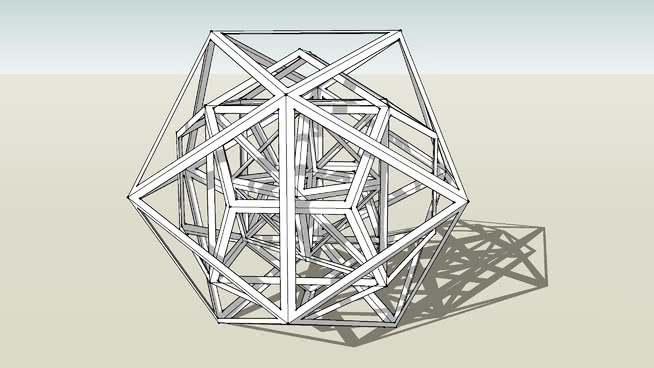
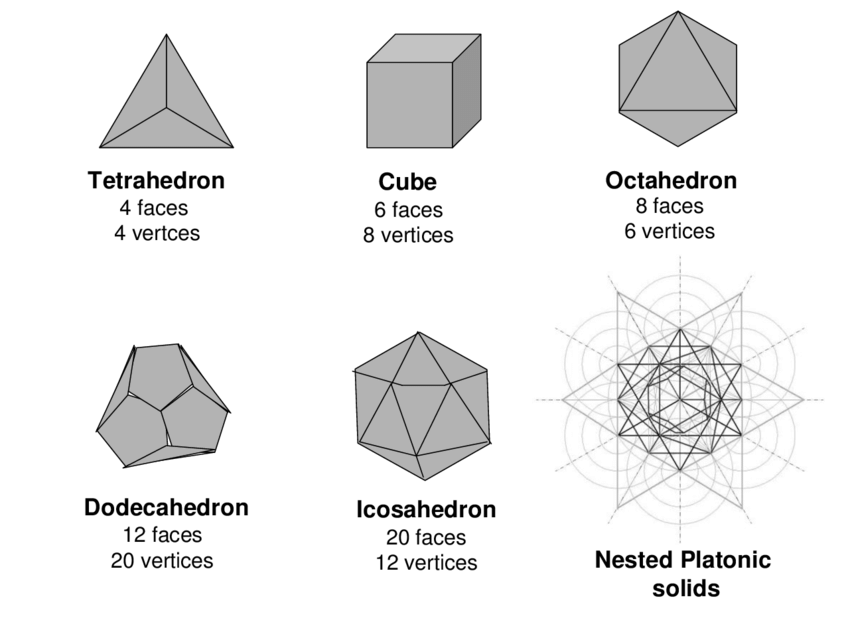
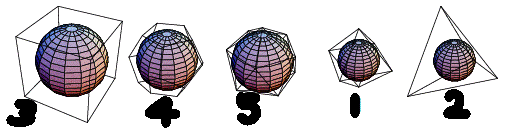
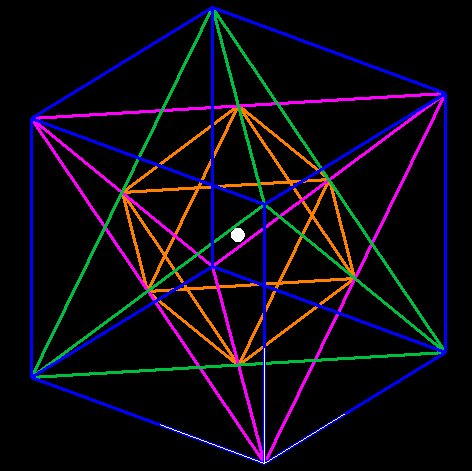
The purpose of this blog post is to provide the means for researchers and readers to better understand how to use this framework to better help understand civilization. To fully understand the arrangement of the nested platonic solids selected for this model with their inspheres, please see the previous blog post which explains this. A few tables and images have been updated but this is still in a drafting stage, currently in it’s second iteration. I can still see places for refinements or alternative placements for vertex labels. One thing which is not consistent throughout this current framework is the order in which the vertices are labelled. When we take one polarity for instance of the northern poles of icosahedron 1 and 2 there is an opposite numbering sequence from that pole to the southern pole where one moves in a clockwise spiral (Icosahedron1) and the other in a part anticlockwise spiral in the northern hemisphere which then reverts to a disconnected clockwise spiral in the southern hemisphere (Icosahedron 2). Its details like this and the multiple choices available for each vertex which form different permutations, particularly between the complex nested dodecahedron in the icosahedron, which make for a confusing and difficult framework to create. Ultimately, this has not been an exercise of exact science but i instead built the framework from simple ideas and realised that symmetries were going to be important to demonstrate that there is an order in civilization. Just as the universe itself is based on symmetries such as in the standard model of physics (this information would be contained in subunit 01, the centroid of the framework which is the origin of the axes which these polyhedra are centred around). (UPDATE 9/2/2020: polyhedra labels require updating in this text as tables have been extended to include more layers)
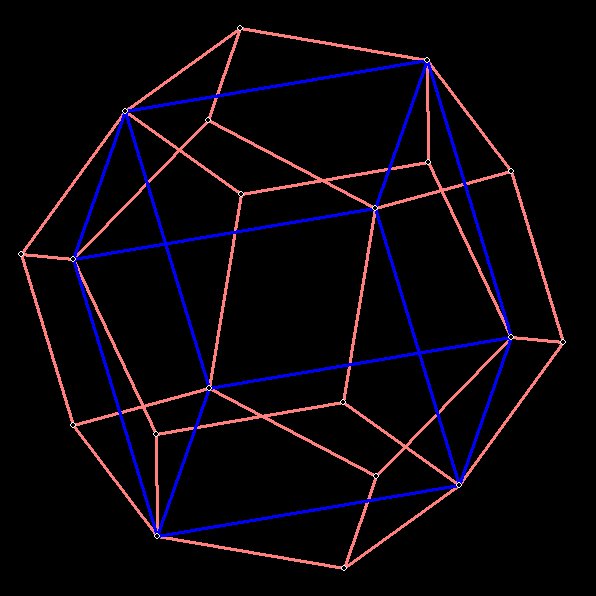
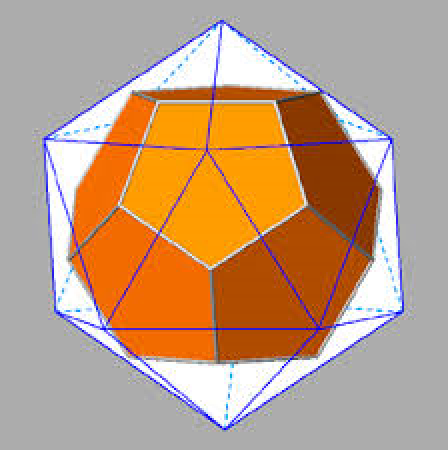
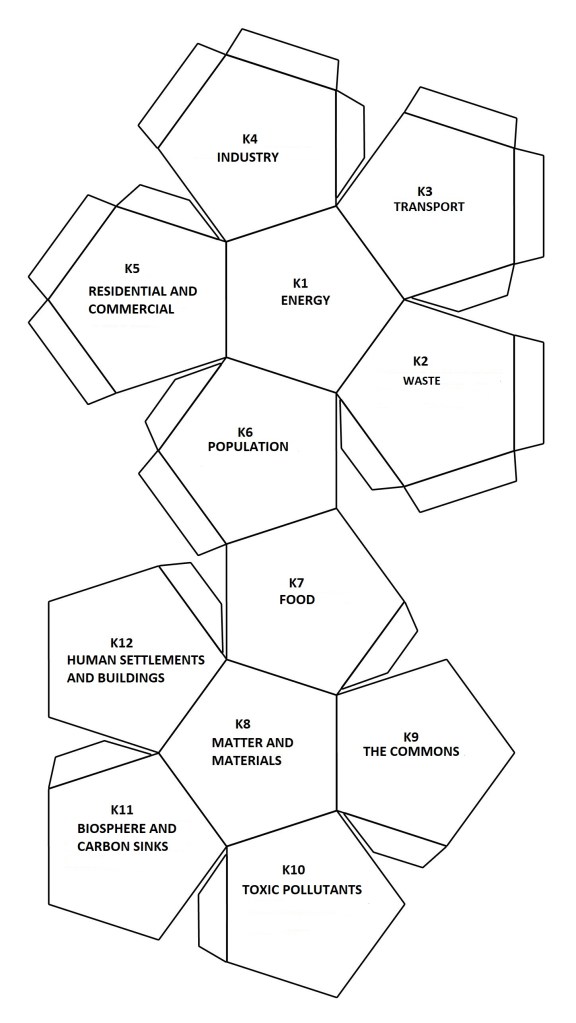
The most confusing part of this current iteration is where we move onto describing the dodecahedron and we use the icosahedral net to describe the dodecahedrons vertices since the faces of the icosahedron correspond to these said vertices. Then similarly we use the same technique to describe the icosahedral vertices. This works because they are duals of one another, having equal and opposite number of faces and vertices.
I would like to leave this post with the tables listed as they are here and with the images followed up in a sequence from which the organisation and layers of the nested platonics can be better understood simply by viewing them like this. My advice, which i myself did with the first iteration, was to print these out as they are like this and cut the pages up to piece the tables together where they become separated in the printing process. Then find a wall or large board where you can attach these papers to and form a display in a location you may find yourself in frequently or can quietly retreat to and sit with a refreshment snack or beverage. Then peruse the framework often and ruminate on the information it contains and read the tables and view the images both in the original table order but analyse them moving in the reverse order also. There are fundamental components at both the inner and outer layers of the framework so it can make more sense when viewing them from either end as you move inwards or outwards.
There is scope to include a further dodecahedron inside of icosahedron 1, this might be useful to display the very basis of our experience here in life which is that of brain chemicals. (UPDATE 9/2/2020: This has now been updated in this blogpost with an extended framework) The polarity would describe the positive and sustainable practices of obtaining brain chemicals versus the negative and destructive means of obtaining them. There must be balance in all of this which is where we must recognise that the universe, life and civilization is governed not just by the dualities of positive vs negative; sustainable vs unsustainable; feminine vs masculine; moral vs immoral; compassionate vs sadistic; growth vs collapse; conservation of biosphere (primary life support systems) vs climate change; Energy vs matter and Atmosphere vs Land and Sea. But it is important to realise that this balance forms a triality, where moderation is found in a neutral component between these two polarities. This is evident in physics where it could be posited that every physical system has available to it a continuum of states running between the positive and negative polarities with the neutral as a centre of these axes. Examples include the atom with positive protons, negative electrons and neutral neutrons and all orbital systems such as planetary motions about the sun, galaxies and their blackhole “singularities”. These form this triality in the form of having a positive polarity of convergence (or collapsing inward to the centre), a negative divergence (where the system falls apart and components break away without connection maintained) and the neutral form of the system where a stable orbit is maintained and the two polarities are in balance. This symmetry argument may guide humanity to understand itself better as individuals and as a collective civilization so we can be radically honest about all of our polarities which exist in the system and where things are out of balance or where no neutral balancing mechanisms even exist. This is the premise of the framework and i can be thankful i did a physics degree as it perhaps aided me in understanding this detail of the universe. You will immediately notice that the framework is split into 3 units as a triality which are those of power (positive): The system rules; the human condition (neutral): The system input; and planetary boundaries (negative): The system output. This is the triality we must understand to overcome our problems globally where power represents the positive/masculine/convergent/unsustainable component, the human condition is that of the neutral and the planetary boundaries as the negative/feminine/divergent/sustainable component.
My next steps are to complete two courses this year for the Sustainability MSc and spend the summer, autumn and winter catching up on the entire field working on this problem. During this time i will be fleshing out a plan for humanity to take action to reach a stable state and overcome this imbalance caused by human induced climate change and biosphere destruction. I begin first with imagining this stable end state, reviewing our current state and identifying which things need to change and how we may be able to achieve this with the hope of forming an aggressive, fast-paced yet realistic and gentle plan to enact these changes. We must remember that the basis of our experience here on earth is fundamentally governed by brain chemicals and that we should focus on promoting the generation of sustainably sourced brain chemicals to ease this transition and create a more satisfying, safer and more adventurous experience for all of humanity for the future. 2020 will be about laying the groundwork to disseminate my ideas further with 2021 seeing me complete 3 final course modules culminating with a 15,000 word dissertation beginning september 2021 (if all goes according to plan [update: spoke to soon…]). I feel that i have a reasonably firm grasp on the problem now and the solutions which we require, i have a range of simple and radical interventions which can help us transition to an advanced civilization. It won’t be easy but there is hope and we must be brave and ambitious as we deal with the fallout of our species’ rapid expansion and operations on earth over the last two centuries.
Some of the words are in bold, which is an artefact of copying and pasting from a previous essay where i highlighted variables which played a factor in the collapse of agriculture and society during the great leap forward in china in the 1960’s (see my previous post of this topic). I might leave this detail intact as it is helpful to break up the dense blocks of text with some form of variation as it can all become a complex haze of information overload for the reader.
The units, subunits and adjuncts of the Planetarian framework
| Unit | Subunit designation | Geometric representation | Subunit of framework described | System Units and Adjuncts description |
| Primary = POWER | 01 | Centroid | The laws of Physics | System Rules |
| Primary | 00 | Sphere 0 | The meaning of life | System Rules |
| Primary | A | Icosahedron 1 | The rules of power | System Rules |
| Primary | B | Sphere 1 | Human philosophy | System Rules |
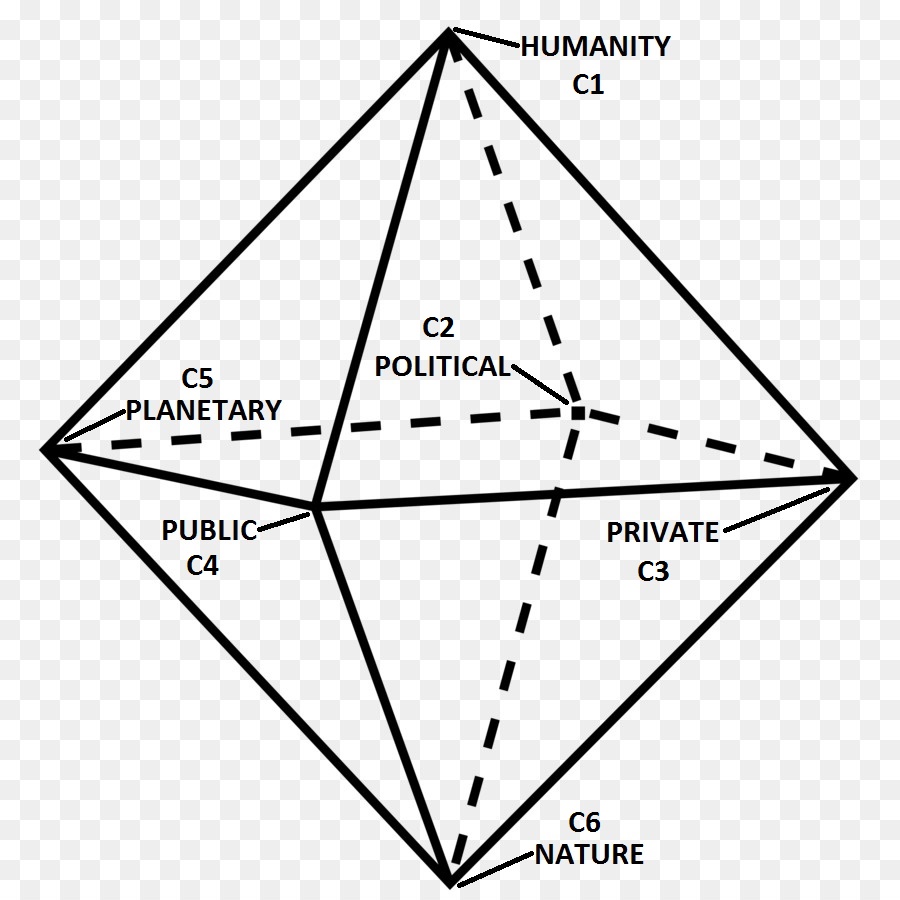
| Primary | C | Octahedron 1 | Fundamental Human and Natural systems | System Rules |
| Secondary = THE HUMAN CONDITION | D | Sphere 2 | Human rights and Human nature | System Input – Self interaction – adjunct 1a |
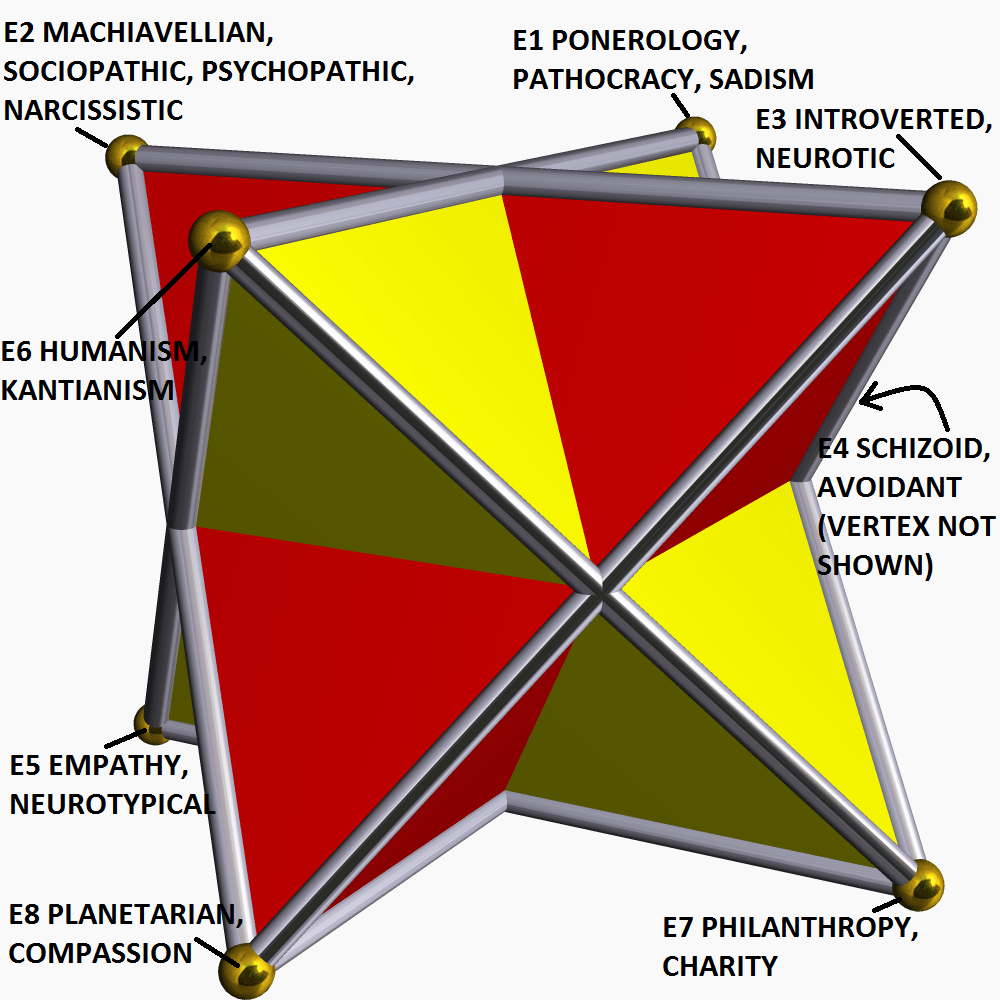
| Secondary | E | Stellated Octahedron (merkaba) | The human condition – Interrelational tendencies | System Input – Self interaction – adjunct 1b |
| Secondary | F | Sphere 3 | Human beings and Personal actions | System Input – Individual humans – adjunct 2a |
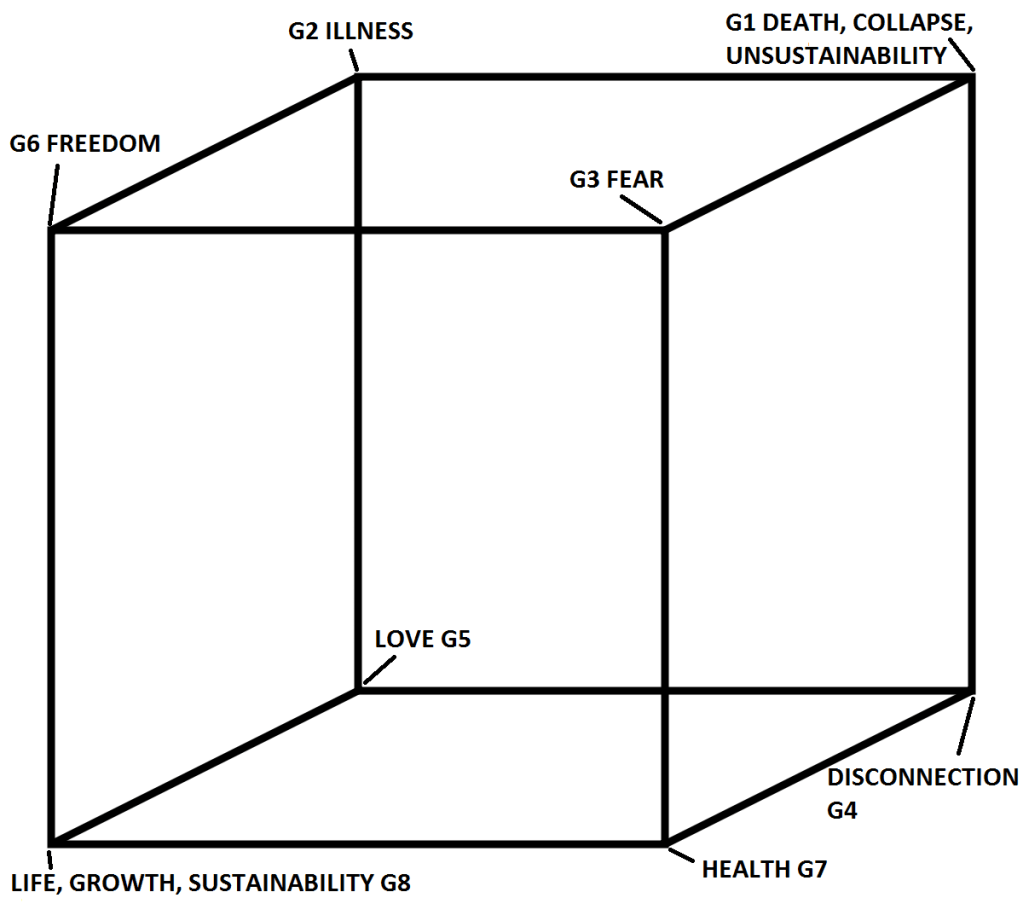
| Secondary | G | Cube | The human experience and lifecycles | System Input – Individual humans – adjunct 2b |
| Tertiary = PLANETARY BOUNDARIES | H | Sphere 4 | Rules for Civilization design and structure | System Output |
| Tertiary | I | Dodecahedron | Human designed Civilization infrastructure – Human mental constructs | System Output |
| Tertiary | J | Sphere 5 | Information used to determine international agreements on action, resource use and allocation | System Output |
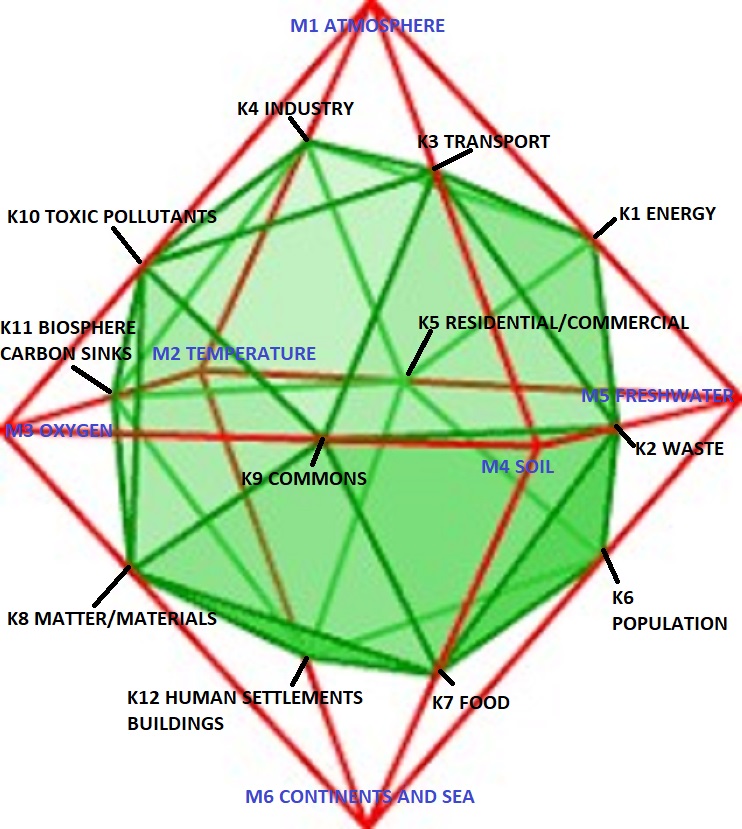
| Tertiary | K | Icosahedron 2 | Human and environmental physical systems | System Output |
| Tertiary | L | Sphere 6 | The Planetarian Hive Mind The collective willpower, intelligence, psychological capacity and capability to extend the longevity of the existence of the human species in the face of existential threat from climate change. | System Output |
| Tertiary | M | Octahedron 2 | Earth’s primary systems for human survival | System Output |
The Meaning of Life
| Subunit 00 Node designations | Systems, Actions and/or Interests | Factors and variables |
| 00 | Meaning of life | Purpose and life mission – Procreation, discovery, progress, goals Meaning – truth and knowledge understanding and discovery Joy, Happiness, Pleasure Love Victory, Glory Adventure Power (for good or bad) Brain chemicals – All the aforementioned are essentially governed by release of brain chemicals dopamine, serotonin, oxytocin etc. Understanding and knowledge of neurochemistry |
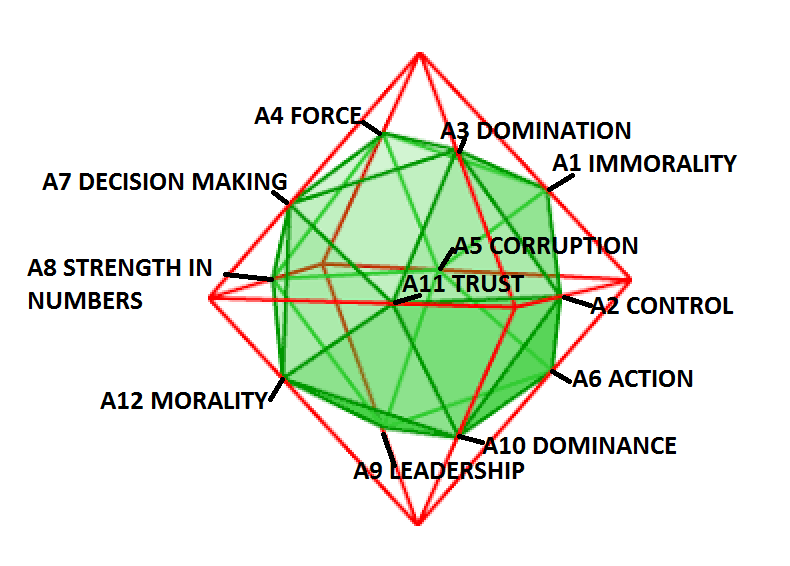
The rules of power
| Subunit A Node Designations and descriptors – Pairs of Variables of the Rules of Power | |
| A12 Morality: Needs of the many, Selflessness, Survival, Security, Safety, Compassion, Honour | A1 Immorality: Self interest, Desire, Greed, Ego, Common interest, Agenda, Fear, Hatred |
| A8 Strength in Numbers: Alliances, Resources, Provision, Access | A2 Control: Acquisition, Stealing, Lobbying, Manipulation |
| A9 Leadership: Authority, Credibility, Reputation, Experience | A3 Domination: Tyranny, Ownership, Oppression, Dictatorship, Slavery, Subjugation |
| A10 Dominance: Natural order, Strength, Skill, Tactics, Instinct | A4 Force: Weapons, Threats, Blackmail, Intimidation, Coercion, Bribery |
| A11 Trust: Information, Intelligence, Diplomacy, Cooperation, Persuasion, Truth, Knowledge | A5 Corruption: Anonymity, Secrecy, Lies, Exclusivity, Organised crime |
| A7 Decision Making: Planning, Timing, Foresight | A6 Action: Bravery, Risk, Boldness, Confidence |
Human philosophy and Fundamental Human and Natural systems
| B – Sphere 1 | Philosophical | Religion, Faith and spirituality, Consciousness, Sentience, Respect for life and earth, Knowledge and understanding, Ethics and values, Morality, Equality, Diversity, Tolerance, Gender roles, Truth, Inclusivity, Humanitarianism, Meaning of life, The limiting of suffering, Logocracy, Meritocracy, Technocracy, Noocracy Nihilism, Immorality, Apathy, Evil |
| C1 | Humanity | Evolution, Evolution of the brain, Human history, Population, Tribalism, Kinmanship, Territory, Villages, Towns, Cities, States, Countries, Continents, Country alliances, Authority, Power, Organisation, Order, Language, Nationality, Revolution Crimes against humanity, Fascism, Autocracy, Terrorism, Genocide, War, Despotism, Tyranny, Authoritarianism, Ultranationalism, Dictatorship, Totalitarian, Corruption, Mafia, Organised crime, Imperialism, Oligarchy, Dystopia, Stealing from the planet and people present and future |
| C2 | Political | Governance, Military, Intelligence agencies, International relations, Immigration, International travel, Democracy, National stability, Food security, Social provision, Diplomacy, Infrastructure, Public investment, Taxation, Cybersecurity, Food and goods distribution, Greenhouse gas emissions oversight Military-Industrial complex, Threat of nuclear war, Pathocracy, Conflict, Confrontation, National instability, Food insecurity, Social deprivation, Poverty, International tensions, Propaganda, nepotism, patronage, cronyism, the old boys network, corruption |
| C3 | Private | Consumerism, Business, Economy, Financial services, Goods and services, Capital, Labour, Industry, Trade and exchange, Transactions, Stock market, Investment, Retail, Travel and tourism, Technology and research, Property and land ownership, Wealth, Money, Pleasure, Entertainment, The news and media, Advertisement, Construction, Clothing and textiles Overproduction, Non-recyclable goods and materials, Profit before planet, Indefinite growth model, Unregulated Capitalism, Slave labour, Renting model, Wealth inequality, Exploitation of people, nations and planetary resources, Tax avoidance, Biased news, Media misinformation, Monopolies, Lobbyist groups, Greenhouse gas emissions, ‘Big Pharma’, Neglecting that prevention is better than cure in healthcare, ‘Big Food’, Fossil fuel industry |
| C4 | Public | Education, Institutions, Employment, Housing, Transport, Water, Sanitation, Recycling and waste, Agriculture, Pensions and welfare, Law and justice, Security, Healthcare, Medicine, Administration, The commons, Leisure, Energy, Scientific research, Culture, Citizen support, Demographics, Socio economics, Communication, The internet, Civil rights Poor work-life balance, Poor life education, Inadequate housing and services, Intensive agriculture, Animal agriculture, Perversion of justice, Poisons in food and water, Industry regulation, Injustice |
| C5 | Planetary | Sustainability, Natural resources, Biosphere, Atmosphere, Cryosphere, Hydrosphere, Geosphere, Oceans, Globalism, Global governance, Civilization, Abundance, Conservation, Regeneration Deforestation, Biosphere destruction on land and in oceans, Human induced climate change, Environmental and economic collapse, Human and other life extinction, Pollution |
| C6 | Nature | Plants, Animals, Forests, Marine life, Food chains, Food webs, Predators, Prey, Natural habitats Species extinction, Poaching, Overfishing, Destruction of habitats and ecosystems |
Human rights and Human nature
| Sphere 2 – D1a | Human rights and human nature | Human rights: Marriage and family, Right to own things, Freedom of thought, Freedom of expression, Public assembly, Choice to join a group cannot be forced upon people, Democracy, Social security, Workers rights, Right to play, Food and shelter for all, Education, Copyright, Fair and free world, Responsibility, No one can take away your human rights. Human nature: Sapience – Intelligence, Creativity, Wisdom, Automatic thinking. Competition, Impulse control, Logic, Reason, Imagination, Problem solving, Rationality, Emotions, Patience, Dignity, Grace, Courage, Passion, Integrity, Humility, Diligence, Temperance, Objectivity, Impartiality, Prudence, Optimism, Pragmatism, Flexibility, Resilience, Adaptability, Empowerment, Vision, Joy, Happiness, Bullying, Gangstalking, Harassment, Hacking, Cybercrime, Crime, Pathological competition, Irrationality, Nepotism, Cronyism, Acquisition and Control, Hatred, Jealousy, Intolerance, Ego, Ignorance, Fear, Oppression, Abuse of power, Control, Lack of respect, Racism, Persecution, Lies, Evil, Cowardice, Subjugation, Elitism, Privilege |
The human condition – Interrelational tendencies
| Subunit E node designations | Action direction | Node Descriptors | Description |
| E8 | For Everyone | Planetarian, Compassion | Planetarian: Defined as a noun to mean an inhabitant of a planet or as a member of staff of a planetarium. It is also informally known to describe a diet which seeks to limit environmental impact such as eating locally grown produce. But we seek here to extend the definition of the word planetarian to include an adjective form which can extend to all human actions where the primary consideration is that of the planet and its inhabitants. Thus we name the model we describe here as being planetarian as it is an effort to preserve humanity and earth. Examples may include a planetarian diet, lifestyle, economy, agriculture, technology, industry, resource use etc. Compassion: Concern for the sufferings or misfortunes of others |
| E7 | For Others | Philanthropy, Charity | Philanthropy: The desire to promote the welfare of others, particularly through generous donation. Charity: An organization or action which is the voluntary aid given to those in need and promote social well being. |
| E6 | Towards Everyone | Humanism, Kantianism | Humanism: A philosophical and ethical stance that emphasises the value and agency of human beings, individually and collectively. It favours critical thinking and evidence rather than dogma or superstition. Kantianism: A branch of philosophy developed by Immanuel Kant who believed that rational beings have dignity and should be respected. |
| E5 | Towards Others | Empathy, Neurotypical | Empathy: The ability to understand and share the feelings of others. Neurotypical: A person that is unaffected by a developmental or personality disorder. Generally considered to form the majority of the population that possess a healthy functioning and well formed brain and brain chemistry baseline profile. |
| E4 | Away from everyone | Schizoid, Avoidant | Schizoid: A personality disorder characterized by an indifference to social relationships which includes social and emotional detachments. Avoidant: A personality or behaviour which avoids intimacy or social interaction. |
| E3 | Away from others | Anxiety, Neurotic | Anxiety: Feelings of worry, nervousness or unease about something with an uncertain outcome. Neurotic: A person that is preoccupied with worried thoughts and may be more fearful in social settings. |
| E2 | Against others | Antisocial personality disorders (ASPD): Machiavellian, Psychopathic, Sociopathic, Narcissistic | ASPD: All show a lack of empathy, conscience, guilt and remorse. Machiavellian: Cynical detached worldview. Manipulativeness. Amorality. Callousness. Strategic and calculating behaviour. Psychopathic: Glibness. Callousness. Proneness to boredom. Egocentricity. Impulsivity. Irresponsibility. Shallow emotions. Pathological lying. Manipulativeness. Violation of social norms and expectations. Potentially aggressive and violent. Emotional hyporesponsivity. Sociopathic: Emotional Dysregulation. Extreme jealousy. Ideation around killing specific individuals. Instigation and engagement of bullying and “gangstalking” victims. Narcissistic: Grandiosity. Sense of entitlement. Exploitative interpersonal style. Self-promoting behaviour for ego reinforcement. |
| E1 | Against Everyone | Ponerology, Pathocracy, Sadism | Ponerology: The theory that large-scale evil is orchestrated by groups led by individuals with various psychological defects such as ASPD (Lobaczewski,2006). They are posited to form networks of mutual pathological conspiracies that act at every social scale which spares no nation. Pathocracy: This ponerology process is theorised to form a pathocracy of governance which is akin to a “double government” (Glennon,2014) or “deep state” commonly mentioned in relatively recent media (Goldsmith,2018). Its chief components are purported to form elements of government, top-level finance, industry, intelligence services, military, security, judiciary and organised crime (Jessop,2015; Marcus,1969; Baker,2017; Cangemi & Pfohl,2009). This psychopathic network actively works on common collusions partially estranged from normal society (Lobaczewski,2006). Sadism: Cruel and vicious behaviour. Humiliation and hurting others to assert dominance or for pleasure. |
Human beings and Personal actions
| Sphere 3 – F1a | Human beings and personal actions | Protected characteristics under human rights: Age, Disability, Gender, Marriage and civil partnership, Pregnancy and maternity, Race, Religion or belief, Sex, Sexual orientation. Civil Rights Personal: Psychology, Baseline brain chemistry profile, Perceptions and preferences, Reproduction, Sex, Diet, Lifestyle, Consumption, Mental wellness, Education, IQ, Life education, Self-expression, Personality, Self-esteem, Art, Transparency, Accountability, Responsibility, Long-term thinking, Purpose, Adventure, Victory, Glory, Self-love, Identity, Authenticity, Principles, Perseverance, Strength, Self-actualisation, Vitality, Ambition, Reliability, Credibility, Emotionality, Selflessness With others: Friendship, Community, Human connection, Love, Compassion, Fairness, Empathy, EQ, Forgiveness, Support, Consideration for others, Nurturing, Sympathy, Altruism, Trust, Cooperation The Dark Tetrad – Sociopathy, Psychopathy, Machiavellianism, Sadism, Narcissism Ponerology, Illness, Stress, Overconsumption, Waste, Addiction, Coercion, Intimidation, Denial, Lust, Gluttony, Greed, Sloth, Wrath, Pride, Prejudice, Selfishness, Neglect, Resistance, Inflicting Suffering, Radicalism, Extremism, Racism, Sex trafficking, Overpopulation |
The human experience and lifecycles
| Subunit G Node Designations | Descriptors |
| G8 | Life, Growth, Sustainability |
| G7 | Health |
| G6 | Freedom |
| G5 | Love |
| G4 | Disconnection |
| G3 | Fear |
| G2 | Illness |
| G1 | Death, Collapse, Unsustainability |
Rules for Civilization design and structure
| Subunit H | Variables |
| Sphere 4 | Rules for civilization design and structure: Sustainable population size for desired range of lifestyles and quality of life Reproduction Lifestyles Quality of life Land and freshwater available in a climate changed world with sea level rise, soil erosion, climatic variability The goldilocks zone – the safest regions of the world from climate change Level of sustainability required to adapt to and mitigate climate change Level of sustainability required to avoid social/environmental collapse and human extinction Amount of energy invested in science and technology research required to carry us through and escape increasingly constrained environmental conditions as climate change progresses eg fusion power, battery research, sustainability research Renewability – Biofuel, Biomass Energy usage and provision – Heating and cooling Transport – electric powered, freight trains, cargo ships, reduce commuting, local services Nutrition and diet – Planetarian, lower bacterial toxins Human settlements and shelter – heating and warmth, water available, materials available to build new housing (rainforest depletion), cement co2 Economy – post capitalism, eco capitalism, speculating on infinite growth model obsolete, Circular economy – mend, repair, recycle, sharing economy Animal agriculture – seaweed for beef, stop rainforest clearing Freshwater use – conservation, textiles industry, animal agriculture, Soils – Regenerative agriculture, permaculture, no tilling method, agroecology, organic, natural fertilisers Pollution – industrial toxins, mercury, lead, organic compounds, Planetary boundaries/commons – nitrates and phosphates fertiliser reduction, biosphere conservation, Minerals – protection and conservation of vital minerals and resources needed for future technologys Biosphere – restoration |
Core system components, Infrastructure and mental constructs of civilization
| Subunit I Nodes | Descriptors | Combination of subunit K nodes that form general components of Subunit I Node |
| I1 | Climate Change | Energy + Transport + Industry |
| I2 | Energy Usage and Provision | Energy + Industry + Residential/Commercial |
| I3 | Building and Utilities Use | Energy + Population + Residential/Commercial |
| I4 | Reproduction | Energy + Population + Waste |
| I5 | Resource Use and Consumption | Energy + Transport + Waste |
| I6 | Ecocurrency = True cost | Transport + Commons + Chemical Pollution |
| I7 | Circular Economy | Waste + Commons + Transport |
| I8 | Biodegradability and Landfills | Waste + Commons + Food |
| I8 | Freshwater Use | Waste + Population + Food |
| I10 | Inequality and Integration | Population + Food + Human Settlements/Buildings |
| I11 | Nation States | Population + Residential/Commercial + Human Settlements/Buildings |
| I12 | Global Governance | Biosphere + Residential/Commercial + Human Settlements/Buildings |
| I13 | Renewability and Sustainability | Industry + Biosphere + Residential/Commercial |
| I14 | Healthcare, Research and Medicine | Industry + Biosphere + Residential/Commercial |
| I15 | Work and Labour | Transport + Industry + Chemical Pollution |
| I16 | Agriculture (AFOLU) | Matter/Materials + Biosphere + Chemical Pollution |
| I17 | Land and Property Ownership | Matter/Materials + Biosphere + Human Settlements/Buildings |
| I18 | Nutrition and Diet | Matter/Materials + Food + Human Settlements/Buildings |
| I19 | Conservation | Matter/Materials + Commons + Food |
| I20 | Corporate Regulation | Matter/Materials + Commons + Chemical Pollution |
Information used to determine international agreements on action, resource use and allocation
| Subunit J | Variables |
| Sphere 5 | Information used to determine international agreements on action, resource use and allocation Wealth and power inequality Commons resources eg rainforests, rare earth minerals, waterways, arable land Population size and lifestyle Determining the wisest long term investment of energy and resources in creating new civilization and in which regions Nuclear threat – denuclearisation International tensions Territory ownership – Identity |
Human and environmental physical systems
| Subunit K Node Designations | Descriptors |
| K1 | Energy |
| K2 | Waste |
| K3 | Transport |
| K4 | Industry |
| K5 | Residential and Commercial |
| K6 | Population |
| K7 | Food |
| K8 | Matter and Materials |
| K9 | Commons |
| K10 | Toxic Pollutants |
| K11 | Biosphere and Carbon Sinks |
| K12 | Human settlements and buildings |
The human capacity to overcome challenges and innovate
| Subunit L | Variables |
| Sphere 6 | The Planetarian Hive Mind The vision, design, planning, foresight and bravery to reach an endpoint of a planetarian civilization which extends the longevity of the human species’ existence. Project management to conserve earth and humanity which uses a collective and individual psychological budget of willpower to save life on earth. Continental and global diplomatic cooperation to achieve the sustainable development goals. The vision, knowledge, understanding and engineering development to achieve fusion power. The vision, knowledge, understanding and technology required to achieve the means for humanity to colonise exoplanets. Thus extending species longevity almost indefinitely limited only by human DNA integrity and the availability of habitable or terraformable planets in the galaxy and universe. Shifting to an abundance mindset rather than one of scarcity when embarking on this planetary operation and to focus not on what we lose but what we can gain from change. |
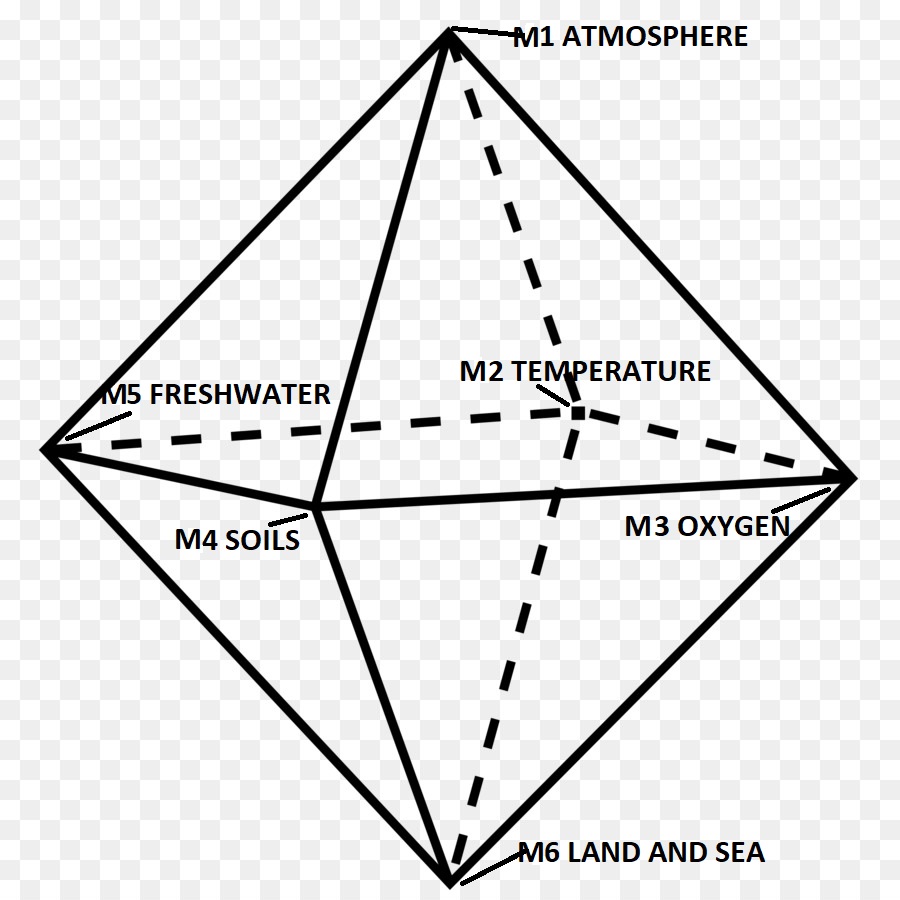
Earth’s primary systems for human survival
| Subunit M Node Designations | Descriptors |
| M1 | Atmosphere |
| M2 | Temperature |
| M3 | Oxygen |
| M4 | Soil |
| M5 | Freshwater |
| M6 | Continents and Sea |

 The Planetarian mode of civilization allows sustainability