[Disclaimer: This is a very rough outline of a potential solution to steer humanity to safety from the dangers of climate change. This is not a comprehensive description and it is more of a collection of notes since it is not a well structured outline and many statements are unsupported and in some cases not followed up with an explanation for why statements were included or what to do about them. I am posting this now so that others can see that there are potential plans being formulated which attempt to address our most difficult of problems. I would take the time to tidy it up but I have lived in 5 different properties over the last 3 months and am due to move into a new property within the next week so i am quite exhausted and am struggling to write coherently and well, so i apologise for the awful grammar, syntax, dull repetitive tone and typos. I will present this in a more complete essay soon. Written September 2020]
The ‘wicked’ 25:
Categories and factors that have the greatest impact:
- ATMOSPHERIC: 1-15
- WATER: 16
- FOOD: 17-21
- SOCIAL: 22-25
| Rank | Factors to consider or Problems that may require addressing in response to the risk civilization poses to itself |
| 1. | Overpopulation – there is no existing consensus or global restriction on the number of humans that can safely or comfortably inhabit earth. |
| 2. | Human competition between groups such as between nations – The ideas of kinmanship and a tribal drive for dominance to ensure the identity, ethnicity or a group collective survives, thrives, maintains and expands territory and power. |
| 3. | The inequalities between each nation’s natural resources and the amounts of material and energy it needs to support it’s population in a particular region. Such needs are determined largely by the weather and regional geography which determine agricultural viability for foodstuffs, shelter types, heating and clothing as basic requirements. |
| 4. | The nations which are the largest GHG emitters, biggest exporters and consumers of fossil fuels, those that hold the world’s most powerful carbon sinks and those that possess powerful military capabilities |
| 5. | Large natural resource based economies – The national efforts for development by increasing wealth derived heavily from natural resources – this can remove ecosystem services (such as rainforests as carbon sinks), accelerate the depletion of exhaustible reserves of useful materials for future generations and generate GHG emissions in the extraction, processing and the end use of the resources |
| 6. | Nations being connected and disconnected in a vertical siloed structure – The individual and group pathologies which arise from these diverse socio-political systems factor into the alliances formed and trading bloc partners aswell as tensions between political or economic adversaries |
| 7. | Energy overconsumption – Reduce energy usage since prevention is better than cure. |
| 8. | Deforestation and biosphere destruction – Carbon sinks and ecosystem services |
| 9. | Excessive fossil fuel consumption for energy – Heating and cooling, Industry, Transport, Fossil fuel extraction |
| 10. | Unessential Industrial activity – Over production, over consumption and over replacement of goods in a non circular economy |
| 11. | Fossil fuel based transport |
| 12. | Agriculture – Animal agriculture – Methane from ruminant cattle and other farmed animals, water intensive practices |
| 13. | Fossil fuel extraction and dependency |
| 14. | ‘Green’ technologies that generate energy from renewable resources are not being rolled out fast enough to smoothly transition the world’s largest GHG emitter’s energy needs to non fossil fuel based alternatives. Producing such a large amount of technology to carry out such a task would involve a high amount of GHG generation in itself also. |
| 15. | Refrigerant mismanagement – potent GHGs often leak out of products that use refrigerants when they reach end of life |
| 16. | Excessive unessential Freshwater use – The high output fashion and textile industry since cotton requires large amounts of water to produce, Excessive luxury features such as swimming pools, water fountains or decorative lawns or plants in water stressed regions, especially freshwater created via desalination, Excessive animal agriculture |
| 17. | Food security and Food waste |
| 18. | Animal agriculture industry and High animal product consumption of national populations |
| 19. | High density urban populations – Urban areas currently require diesel trucks to deliver necessities like food and medicine which run on a ‘just in time’ delivery basis. Electric powered alternatives are yet to be widely adopted. A number of frequent citizen activities in cities can often take place in distant locations requiring transportation between locations. |
| 20. | Food being predominantly produced non locally – A ‘locavore’ based diet reduces food transport emissions of trucks and shipping and also increases food security. Urban farming is not widely practiced. |
| 21. | Biogeochemical flows – Non organic agricultural practices and other practices which cause soil erosion |
| 22. | Varying degrees of infrastructure development among nations – Undeveloped nations may wish to develop quickly and thus may want to do so using fossil fuels and developed nations may be resistant to policies which could be viewed as decreasing comfortable lifestyles perhaps with less modern conveniences. |
| 23. | Wealth competition between individuals, groups and nations – drives emissions and biosphere destruction |
| 24. | Resource competition between individuals, groups and nations – drives emissions and biosphere destruction |
| 25. | Religious or cultural beliefs, values, tradition, doctrine, law or dogma which may impede development of international integration due to differing views on human rights or acceptable behaviours. |
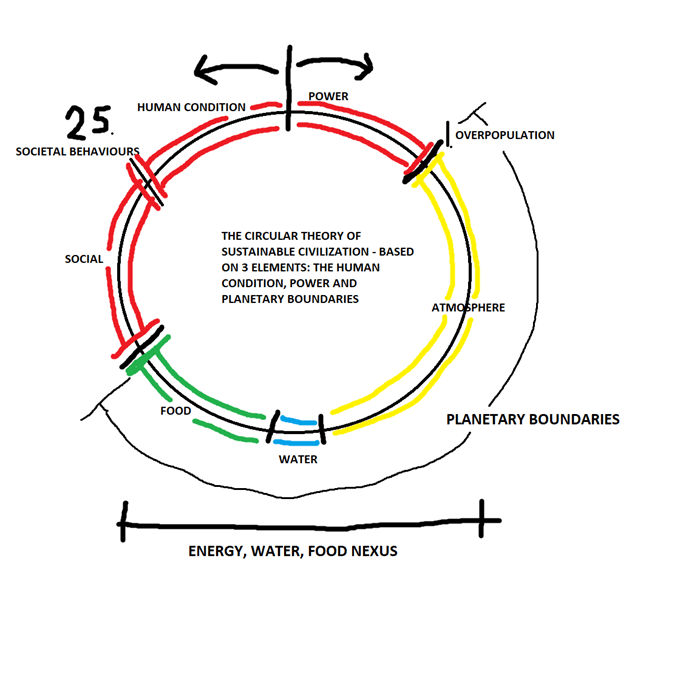
The Circular Theory of Civilization shows that the secondary unit, the human condition, feeds not only into the primary system unit, power, but also feeds into social issues. So it is a bi-directional flow where every factor connects to each other both clockwise and anticlockwise. So both the primary unit and secondary unit form the outcome of the tertiary unit which is humanity’s impact on planetary boundaries.
The Planetarian Framework of Civilization shows that Power as the primary unit nests inside the secondary unit of the human condition since the primary unit describes only the rules of the system and power rather than it’s exercising of the rules of power. The human condition then determines how such rules are adhered to or used in personal and interpersonal interactions. This then forms the outcome of human activities on planetary boundaries. So the planetarian framework is a theoretical modelling whereas the circular theory of civilization is a more practical view of how civilization works.
The wicked problems that exist within the human condition itself invariably create other sets of social issues which are not immediately connected to the wicked problem of environmental damage caused by civilization. There are some wicked problems of the human condition which are not immediately obvious or are conspicuous in their effects on civilization which can lead to unsustainable practices. An obvious example of the human condition which causes wicked problems is greed but a less obvious one is that of jealousy as the actions that are generated by jealousy are more often social and not physical. Jealousy creates actions which are intentionally carried out in a secret, unspoken or unacknowledged manner since it is often a matter of pride or conceit to not express jealousy openly as this could damage the ego. There are a great number of these types of psychological issues but in the designing of a sustainable circular civilization it is most important to recognise which of these facets of the human condition have the greatest power to damage or heal society and thus, subsequently the environment, and then to address these as priorities. Just as with prioritising the atmosphere as a commons and taking into account the nations which have the greatest ability to increase or lower the concentration of GHGs in the atmosphere.
So it is most important to focus on the combined elements of the human condition and power and identify areas where there is scope to give those with power the ability to satisfy their emotional needs and desires so that they do not feel a need to exercise their power in a harmful way and instead act more benevolently. These ideas are difficult to talk about since they may be controversial or social taboos to discuss as they cause embarrassment, shame or a threat to individuals or groups of people that share a common dissatisfaction in life. These can stem from different aspects of the human condition but many of these pitfalls that individuals experience lead to similar outcomes with respect to how they effect the behaviour of such individuals and how this impacts other groups of people.
It might be possible to build infrastructure and policy into a new design for a sustainable civilization which meets the need for the sustainability of an individual’s happiness and social wellbeing to avoid the most damaging aspects of human behaviour on the environment. This may come in the form of education for people to make informed decisions so that there is less chance of people becoming disillusioned by life. When this reaches a threshold within a large enough number of individuals you can see collective pathologies act out with hatred and in ways which disrupt or damage the system of civilization. But there is also a need for a physical intervention by means of creating infrastructure which is better suited to the human condition so that individuals and the collective can thrive and move together towards progress on an upward, positivity spiral as opposed to downwards. All living organisms require certain conditions in their environment to survive and thrive and the same is true for humans. The factors that receive most attention when it comes to environmental issues are the physical factors of matter and energy but to truly transform civilization and gain the approval and acceptance of the wider society requires more attention paid to the psychological factors. Some obvious ones which are commonly represented, such as in the sustainable development goals, are issues of inequality such as those of gender, race or poverty. Also those associated with social class or wealth inequality and the accompanying work-life balance that such distinctions provide individuals. But to build the strongest foundation from which to design a sustainable civilization, requires an investigation into the main pillars of the system which are power and the human condition which have their roots in philosophy and brain chemistry. This would be the case if we were building a civilization from scratch but we find ourselves in the position of there being a disillusioned masses and small groups which exert their will and power on other people in harmful ways which creates a positive feedback loop and a downward spiral.
So to design these intervention points requires knowledge about the human condition acquired from observations and experience which can inform where the most powerful and pernicious behaviours occur in the collective and how to remediate them. One of the most fundamental drivers for brain chemical release is the desire for sexual intercourse which is perhaps the mechanism nature uses to ensure it’s resources are recycled by way of integrating genetic material across generations so that the cycle of life persists. Since so much in the universe and nature displays this completeness and circularity it is no surprise that life has this embedded mechanism to replicate the same circularity. Animal life often emulates plant life as a form of camouflage to increase it’s success in it’s role often as either predator or prey. In a similar way most animal life including humans seeks to emulate the universe as a triality of three elements of positive, negative and neutral and creates a balanced equation which is similar to the concept of completeness or circularity. So life exists in this circular cycle perhaps because it follows principles which the universe uses to persist which if transgressed, the fundamental laws of existence breakdown and it triggers collapse. So the need for sex and to reproduce is driven by the lure of the brain chemicals and sex hormones so that life adheres to the order of the universe.
But this triality must be balanced. An example of the three components of the triality are positive, negative and neutral components of the atom. Others include father, mother, child; convergence, divergence, stable orbit; power, human condition, planetary boundaries. So if humanity does not balance it’s sexual reproduction we either become extinct because of too few or too many reproducing pairs of people. The conclusion to be drawn is that sex is such an important activity to be balanced in ones own life and that of the entire global species that a sustainable civilization must be redesigned around that element not just for the physical reasons of environmental pressures but also the psychological elements which feed into social issues. There are many other sources of brain chemical producing behaviours which must be balanced to ensure the individuals satisfaction in life which determines their thoughts, feelings and actions and interactions which make up civilization. So brain chemicals form the basis of our actions because they influence our philosophy in life and the morality that we exhibit. So creating more time and space for individuals to engage in activities which provide an abundant, adequate yet moderate supply of brain chemicals will create a happier, more harmonious, less selfish and less malicious population. This can also help to appease and subdue an anxious populous during the uncertain period of transition and to compensate for the new restrictions of a rescue strategy for humanity.
System Rules: POWER
System Input: THE HUMAN CONDITION
System Output: PLANETARY BOUNDARIES
- Overpopulation – there is no existing global restriction on the number of humans that can safely or comfortably inhabit earth. Limits could be set on family sizes and birth rates, particularly for countries that have the highest global share of GHG emissions. Having fewer children is stated as the number one personal action to decrease your personal carbon footprint being 30 times more effective per child than any other action (Wynes and Nicholas,2017). Attempts to describe a stable civilization include ideas such as global steady-state theory which maintains a stable population size (ref).
- Human competition between groups such as between nations – The ideas of kinmanship and a tribal drive for dominance to ensure the identity, ethnicity or a group collective survives, thrives, maintains and expands territory and power. Despite the creation of global citizenship, each nation and region should maintain a certain sovereignty and cultural identity. This is because humans are territorial and by sticking to a 70% majority of each region’s cultural demographic will prevent discontent of people based on a threat of marginalisation. This figure of 70% is based on research showing that a minority of 25% or more is the tipping point to significantly alter the dynamics of the majority (Centola et al.,2018). But with birth rates fixed, such ratios would remain static and arguments based on marginalisation of pre-existing majorities would be obsolete and discourage intolerance and incitement to hatred.
Some nations have more work to do in becoming more sustainable such as those that have the highest percentages of their population living in cities. In contrast countries such as China and India have large portions of their populations living rurally of 41% and 66% respectively (UN,2019, The World Bank,2018). China as a country only became fully electrified by 2015 (Gang,2017). Thus, most Chinese rural populations still use off grid and mainly renewable methods of cultivating, harvesting, storing and cooking of food.
The sharing of natural resources equitably between nations would create an eco-economy where a nation’s comparative wealth is not determined by the natural resources that it’s land holds.
3. The inequalities between each nation’s natural resources and the amounts of material and energy it needs to support it’s population in a particular region. Such needs are determined largely by the weather and regional geography which determine agricultural viability for foodstuffs, shelter types, heating and clothing as basic requirements. Inequality and integration: Creating a form of global citizenship whereby people can cross countries and continents via the renewable electricity powered vehicles driven over superhighways. Global citizenship education and the adoption of human rights laws would be required for any city, state or country to be initiated into this planetarian network of safe havens for communities to live in harmony with each other and their environment.
4. Regional priorities to be incorporated into an equitable global plan. The nations which are the largest GHG emitters, biggest exporters and consumers of fossil fuels, those that hold the world’s most powerful carbon sinks and those that possess powerful military capabilities.
Largest GHG emitters: China, USA, India, Russia, Japan, Germany, Iran, South Korea, Saudi Arabia, Indonesia, Canada, Mexico, South Africa, brazil, Turkey, Australia, UK, Poland, France, Italy, Kazakhstan
Regions with most powerful existing carbon sinks: RAINFORESTS: Amazon Rainforest (Brazil (60%), Peru, Colombia, Venezuela, Ecuador, Bolivia, Guyana, Suriname, French Guiana), Congo rainforest (Angola, Cameroon, Central African Republic, Republic of Congo, Burundi, Rwanda, Tanzania, Zambia, Equatorial Guinea, Gabon), Valdivian temperate rainforest (Chile, Argentina), Daintree rainforest (Queensland Australia), Southeast Asia (Indonesia, Laos, Cambodia, Malay peninsula), Tongass National Forest (North America), Kinabulu national park (Malaysia), Santa Elena Cloud forest reserve and Monteverde Forest (costa rica), Sinharaja forest reserve (sri lanka), Sundarbans forest (India, Bangladesh), Papua New Guinea, Sapo Rainforest (Liberia), Bosawas Biosphere reserve (Nicaragua), Perucica (Bosnia Herzegovina),
WETLANDS: West Siberian Lowland(Siberia), Pantanal (Brazil, Bolivia, Paraguay), Rio Negral (Brazil), Ngiri-Tumba-Maindombe and Grand Affluents (DRC), Queen Maud Gulf (Canada), Sudd (South Sudan), Okavango Delta (Botswana), Gueltas et Oasis de l’Air (Niger), Plaines d’inondation des Bahr Aouk et Salamat (Chad), Esteros del Ibera (Argentina),
Camargue (France), Wsur (Papua new guinea), iSimangaliso (South Africa), Mekong (Vietnam), Kakadu (Australia), Kerala (India), Everglades (Florida), Okavango (Botswana),
Countries with nuclear weapons: USA, Russia, France, UK, India, Pakistan, Japan, North Korea, Israel
Regions with greatest capacity for afforestation: USA, Russia, Central Africa (spanning east to west – Nigeria to Kenya) Mexico, Southern Africa, Madagascar
Biggest exporters of fossil fuels: PETROLEUM: Saudi Arabia, Russia, United Arab Emirates, Iraq, Nigeria, Angola, Canada, Venezuela, Kazakhstan, Kuwait, NATURAL GAS: Qatar, Norway, EU, Netherlands, Algeria, Turkmenistan, Bolivia, USA, COAL: Indonesia, Australia, Colombia, South Africa, Mongolia, Vietnam.
Biggest Importer: South Korea, Taiwan
| China, USA, India, Russia, Japan, Germany, Iran, South Korea, Saudi Arabia, Indonesia, Canada, Mexico, South Africa, Brazil, Turkey, Australia, UK, Poland, France, Italy, Kazakhstan. Peru, Colombia, Venezuela, Ecuador, Bolivia, Guyana, Suriname, French Guiana, Angola, Cameroon, Central African Republic, Republic of Congo, Burundi, Rwanda, Tanzania, Zambia, Equatorial Guinea, Gabon, Chile, Argentina, Laos, Cambodia, Malaysia, Costa Rica, Sri Lanka, Bangladesh, Liberia, Nicaragua, Bosnia, Herzegovina, Paraguay, Botswana, Niger, Chad, Papua New Guinea, South Africa, Vietnam, Pakistan, North Korea, Israel, Central Africa (spanning Ethiopia to Nigeria and West Africa), Southern Africa (Zambia, Mozambique, Zimbabwe, Malawi), Madagascar Saudi Arabia, United Arab Emirates, Iraq, Venezuela, Kuwait, Qatar, Norway, EU, Netherlands, Algeria, Turkmenistan, Mongolia, All other European countries, New Zealand These are the countries which may be the first to be included in a global plan = 80 to 100 countries out of ~192 sovereign territories. |
Brazil is a country of concern to the problem since it possesses an important and powerful living carbon sink for the world in its rainforests. But it is being continually cleared to transform it into suitable land for mining minerals and for grazing cattle which emit large amounts of the potent GHG methane (TRASE,2019). Another important actor is that of Russia which has a large population living in a relatively cold climate requiring high energy needs to heat buildings during the coldest months (Bashmakov,2016); It holds the position as the world’s second biggest exporter of fossil fuels comprising over 50% of its exports as of 2018 (Swann,2019;WITS,2018); and it is one of the few countries that possess advanced military capability which is armed with nuclear weapons. Will Russia accept a large reduction in its future profits if shifts are made away from fossil fuels to save the environment? And if so, how will it provide the large energy demands to heat the homes and workplaces of its large population in a cold country without the continued high income to invest in green technologies to power its society? The examples of Russia and Brazil demonstrate that if these inequalities of resources are not incorporated into an equitable solution then it could lead to a tragedy of a global commons such as the atmosphere or rainforests if they feel they have no other option than to exploit their nation’s resources. International tensions of this sort also present a risk of war.
5. Large natural resource based economies – The national efforts for development by increasing wealth derived heavily from natural resources – this can remove ecosystem services (such as rainforests as carbon sinks), accelerate the depletion of exhaustible reserves of useful materials for future generations and generate GHG emissions in the extraction, processing and the end use of the resources
Matter and materials: Only the mining and extraction of natural resources would be for necessary industries such as natural materials for construction, machinery, tools, textiles, hygiene, sanitary or cosmetics manufacturing etc.
6. Nations being connected and disconnected in a vertical siloed structure – The individual and group pathologies which arise from these diverse socio-political systems factor into the alliances formed and trading bloc partners aswell as tensions between political or economic adversaries.
The New Shape Prize was an essay competition organised by the Global Challenges Foundation which called for global governance to be redesigned (Global Challenges Foundation,2017). Borne from this competition were two somewhat similar entries which describe a club based model (Rade,2017) or a league of sustainable cities (Mihălțianu,2017) which uses ideas that may have application to the aforementioned dilemma of natural resource inequalities between nations. This type of subnational multilateralism could allow the incorporation of features of other ideologies or theories such as transnationality, flexible nationality and global citizenship to help break the vertical siloed model of separate nation states into a more horizontal, paradiplomatic communitarianism among groups of nations. Then to address the economic inequalities it could be possible to borrow ideas from mutualism, distributism, pluralism, eco communalism and bioregionalism to correct the natural resource imbalances. Increasing the number of degrees of freedom in the system can increase options and connectivity which decreases the chances of nations becoming limited by their own geographic territories.
Such a bioregional transnational distributism which incorporates global citizenship could create additional degrees of freedom in the system of civilization by increasing the mobility of selected groups of people. Also, in a future world without publicly available flights and fossil fuelled transportation we should desire to provide all citizens of the world the opportunity to become global citizens and experience the world’s varying cultures, climates and landscapes. This could be achieved by creating large networks of highways which are provided with electric vehicle battery charging stations at appropriate locations spanning entire continents. Fleets of electric coaches could be utilised to allow the mass transport of groups across these distances which could enhance the resilience of any given population’s ability to make emergency evacuations from the effects of climate change such as floods, droughts, crop failures and wildfires whilst still limiting GHG emissions. This infrastructure could even further mitigate effects of climate change and reduce GHG’s by moving large numbers of healthy individuals up and down continents according to seasonal demands for energy such as heating and cooling. With the elimination of summer tourism leaving large numbers of abandoned hotels due to limiting unessential aviation, these could provide accommodation for those escaping cold winters. The derelict office buildings left from minimising industrial operations could be repurposed as urban farming centres or to accommodate continental neighbours that are escaping dry and hot summers. This would form a network of minimalist nomads that could be a new source of seasonal labour that could help in harvesting crops at the end of summers or sewing new crops at the end of winters as simple examples.
The issue of overpopulation (1) is placed at the top of the list because whilst it is a long term solution already recommended by other scientists (Ripple et al,2017), the setting of limits might also help remedy other issues such as competition. Our predominant tribal nature (2) is displayed by human efforts to compete for wealth accumulation and resources to benefit ourselves and the national collective. The third most impactful issue to take into account are the inequalities between each nation’s natural resources (3) which includes the environmental conditions such as its location and latitude determining it’s climate and geographic features of the land and weather such as temperature and rainfall. These factor into a nation’s energy needs and economy such as required imports or profits from exported resources and goods.
These factors, in the context of combatting climate change, might apply most importantly to the world’s nations or continents that are the largest emitters of GHG’s (4) such as the USA, China, Europe, India, Russia, Japan and Brazil (Friedrich, Ge & Pickens,2017). The individual and group pathologies which arise from these diverse socio-political systems (6) factor into the political and economic alliances or adversaries which form. Thus, sets of nations being connected and disconnected as individual or grouped vertical siloes forms a very linear economic landscape with few degrees of freedom and this can create many opportunities for disagreements, stalemates, and rivalries. These first six foundational issues provide significant information to determine a general direction that a solution derived from this problem structuring would follow.
The idea of creating a bioregional cooperative which incorporates principles of mutualism, distributism, pluralism, eco communalism, paradiplomatic communitarianism, transnationality, flexible nationality and global citizenship is probably the most technically challenging aspect of this plan to convert the world into an adequately sustainable system. But using the logic presented in these first six points shows that such a system may be necessary because without it we risk potential instabilities in the ability of countries to agree upon and work together in a new framework of how to use resources and energy. I intend to make this the focus of my dissertation and drawing on the works of the club based model, league of sustainable cities, Thomas Piketty and others that discuss transnationality and to make the case that this model will be necessary for global sustainability.
7. Energy overconsumption – Reduce energy usage since prevention is better than cure.
Energy production, usage and provision: As can be seen in image 1 this sector has the largest share of global GHG emissions at 25% (IPCC,2014). We must shift to non-fossil fuel sources of energy faster. This sector effects the “other energy” sector as it mainly includes emissions from fossil fuel retrieval, processing and distribution which could save almost 10% GHG emissions just by itself.
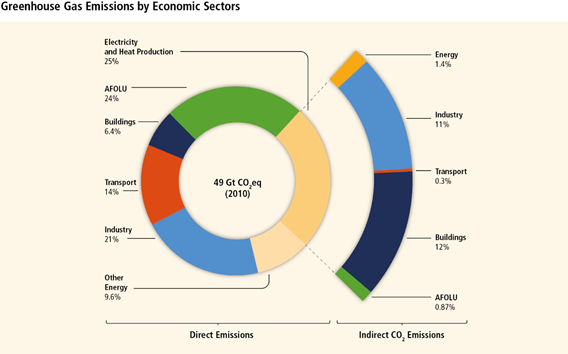
Image 1: Greenhouse gas emissions by economic sector (Source: IPCC,2014)
Land and property ownership: New rules are required for the ownership of land and property that would seek to change the current renting model which is the number one passive income source and leads to property monopolies (Piketty,2013). The current mortgage and inheritance models allow for wealth to be consolidated upon and maintained in small circles of dynasties which contributes to the wealth inequality in the world (McElwee,2014).
Limiting the construction of new human settlements and building projects which use cement and timber will reduce GHG emissions. The retrofitting industry for energy efficient buildings would require large additional resources for training a new labour workforce to adapt existing buildings and help in the construction of new energy efficient eco-friendly buildings.
Research, healthcare and medicine: Research institutes should divert intellectual and material resources to provide efficiency improving methods and technologies to combat climate change. Healthier populations from healthier diets and more active lifestyles should alleviate pressure on health services and decrease their carbon footprint.
- Deforestation and biosphere destruction – Carbon sinks and ecosystem services
The commons: Efforts to increase conservation of the biosphere and carbon sinks such as those in table 4 are essential tools to combat climate change. Planting trees globally and specifically reforesting tropical rainforests are vital to restore equilibrium to the planets ecosystem support systems. Developed nations can help developing nations in this endeavour by setting up renewable energy supplied bases in and around rainforests, equipped with off-road electric vehicles to carry out this large-scale task and minimise GHG emissions whilst doing so. - Excessive fossil fuel consumption for energy – Heating and cooling, Industry, Transport, Fossil fuel extraction. Reduce energy usage, prevention is better than cure.
“Ecocurrency”: This would be a new currency which is based on a “true cost accounting” of resources and the energy used to provide goods and services including their environmental impact (ecounit,2012). Existing corporations are not currently held accountable for the true cost of natural resource extraction and they reap huge profits by stealing these resources from future generations. The well-being of future generations (Wales) act 2015 serves as legislation which could support such an ecocurrency.
This ecocurrency would be non-exchangeable with existing currencies and by introducing a deflation rate on these over a fixed period would force those with wealth to invest into any of the new green initiatives and policies suggested here. This would provide an investment return in the form of this new ecocurrency. - Unessential Industrial activity – Over production, over consumption and over replacement of goods in a non circular economy
Industry: This being the second largest contributer to GHG emissions as seen in image 1 we could reduce large amounts of emissions by minimising industry to only essential industrial production of goods. Reducing industrial output so drastically would result in the loss of many jobs but this could be resolved if we implement recommendations that the total number of hours worked of the average employee should be reduced to around 21 hours per week (Coote,Franklin and Simms,2010) or follow a 4 day work week policy (Catlin,1997). The introduction of variable working hours could take into account a lifetime’s worth of working hours as being averaged to be 21 hours per week from ages 16 to 66 and once that amount has been served the citizen can retire to claim a universal basic income or receive greater incentives to stay in the workforce.
Corporate regulation: Any companies producing goods and providing services would have caps placed on the profits they could acquire per unit of the capital sold to consumers. A transparency and responsibility for corporate activities to protect the environment and life on earth would include the limiting, safe handling and elimination of toxic pollutants where possible.
Resource use and consumerism: The move away from mass production of consumer goods and consumerism will reduce GHG’s and preserve materials for future generations.
Circular economy: Global economies would transform to follow the template of “doughnut economics” (Raworth,2017).
- Fossil fuel based transport
Transport: Another large portion of GHG emissions come from the transport sector as shown in image 1. If we were to reduce transport to that of only essential needs such as emergency service vehicles or those that run on “clean and green” energies such as electric cars, buses, coaches and trains we could reduce transport’s GHG emissions. The developed world’s system of the “just in time” delivery model is largely run by diesel powered trucks carrying heavy goods such as foods, household machinery and furniture. These trucks are not easily replaced by battery powered trucks because the batteries required are large and heavy in order to produce the same horsepower that combustion engines can (Kaufmann and Moynihan,2019). So, until electric trucks are able to enter the transport market or we can shift to a largely local economy, we will rely on diesel trucks. Drastic cuts will include taking combustion engine powered cars off the roads and cutting aviation flights, freight trains and shipping down to only essential transportation needs. With the massive industrial sector contraction proposed in this policy brief we would reduce the need for commuting and we should aim to have only electric powered cars and buses on the roads. - Agriculture – Animal agriculture – Methane from ruminant cattle and other farmed animals, water intensive practices. Agriculture: Our current western food production models rely heavily on fertilisers which generate large GHG emissions during their production (Zhou et al.,2019). Moving to regenerative agriculture and no tilling methods of farming will not only reduce GHG emissions but also protect soils as a precious carbon sink (Marshall,2015). We should also hope to shift to a more locavore-based diet including the development of urban agriculture and adopting food sources such as backyard chickens in city suburbs for protein and eggs. Expecting to feed current city populations on urban agriculture by using all available green land is unrealistic and we should try to minimise food deliveries by diesel powered trucks and so an exodus of large numbers of city dwellers to rural regions will further aid in minimising GHG emissions. A diet that is lower in animal products will also reduce GHG’s emissions such as methane from enteric fermentation of ruminants. A related and equal portion of GHG output to that of agriculture comes from forestry and other land use (FOLU) as shown in image 2. This includes deforestation and the conversion of forest into agricultural land. Halting this deforestation could be achieved through the proposed transnational bioregional distributism. If such a proposal fails and no diplomatic resolution is forthcoming other traditional punitive political strategies could be used such as trade embargoes or as a last resort it may require global military intervention because our rainforests are so vital that they are worth fighting for.
- Fossil fuel extraction and dependency. Disincentivise fossil fuel extraction by removing fossil fuel industry subsidies.
- ‘Green’ technologies that generate energy from renewable resources are not being rolled out fast enough to smoothly transition the world’s largest GHG emitter’s energy needs to non fossil fuel based alternatives. Producing such a large amount of technology to carry out such a task would involve a high amount of GHG generation in itself also.
Sustainable restructuring of society towards lowering city population density. Accelerate the rollout of renewable energy technologies in a targeted and moderated fashion to meet the essential energy needs of populations.
- Refrigerant mismanagement – potent GHGs often leak out of products that use refrigerants when they reach end of life
Residential and commercial: This sector contributes 6.4% of total global GHG emissions as shown in image 1, mainly due to onsite energy generation and fuels used for the heating of buildings, heating water and cooking.
Reducing residential energy usage could involve the introduction of local food kitchens in all regions so that foods can be refrigerated, frozen and cooked on a larger scale which increases efficiency, reduces personal energy usage and helps citizens eat a plant rich diet. The possibility of removing the need for refrigerators in many households can answer the call for better global refrigerant management which is hailed in one paper as the number one method to combat climate change (Hawken,2017;Nash,2019).
- Excessive unessential Freshwater use – The high output fashion and textile industry since cotton requires large amounts of water to produce, Excessive luxury features such as swimming pools, water fountains or decorative lawns or plants in water stressed regions, especially freshwater created via desalination. Freshwater availability and usage: This would dictate the movements of minimalist nomads and the capacity to support climate refugees.
- Food security and Food waste. Feed more plant crops to humans rather than to cattle and reduce the scale of animal agriculture. More efficient communal and mass scale storing and cooking of foods to reduce food waste.
- Animal agriculture industry and High animal product consumption of national populations. Reduce such consumption by providing more cooked foods from local food kitchens and food halls where experts in plant based foods can provide properly cooked and delicious tasting animal product meal alternatives.
- High density urban populations – Urban areas currently require diesel trucks to deliver necessities like food and medicine which run on a ‘just in time’ delivery basis. Electric powered alternatives are yet to be widely adopted. A number of frequent citizen activities in cities can often take place in distant locations requiring transportation between locations. A large scale migration of people out of cities and into rural regions that are more self sufficient and sustainable. Reduce the growth of city populations by disincentivising high birth rates in cities which may incentivise more families to choose rural living and provide a larger, young population there to help on farmland.
- Food being predominantly produced non locally – A ‘locavore’ based diet reduces food transport emissions of trucks and shipping and also increases food security. Urban farming is not widely practiced. Convert all available and appropriate arable land in cities such as parks, golf courses and grassland into cropland and allotments. Use suitable city building rooftops as urban farms to grow crops. With decreased city population and workforce repurpose these newly unused domestic and commercial buildings for food production using new technologies such as led grown crops.
- Biogeochemical flows – Non organic agricultural practices and other practices which cause soil erosion. Reducing the production of fertilisers and pesticides will lower greenhouse gas emissions and instead practice sustainable farming methods. Permaculture, regenerative agriculture etc.
- Varying degrees of infrastructure development among nations – Undeveloped nations may wish to develop quickly and thus may want to do so using fossil fuels and developed nations may be resistant to policies which could be viewed as decreasing comfortable lifestyles perhaps with less modern conveniences. Use a mutual development fund for the club based model and league of sustainable cities, sourced from the investment of old currencies into the ecounit currency, to help developed cities to transition via degrowth to a more sustainable system and help developed nations to develop sustainably.
- Wealth competition between individuals, groups and nations – drives emissions and biosphere destruction. Bioregional distributism and transnationality of a league of sustainable cities and countries can switch from economic competition to sustainable competition.
- Resource competition between individuals, groups and nations – drives emissions and biosphere destruction. Sharing resources equitably between the members of the club of sustainable bioregions using the values of distributism.
- Religious or cultural beliefs, values, tradition, doctrine, law or dogma which may impede development of international integration due to differing views on human rights or acceptable behaviours. Designate countries and cities which can align to a shared value system of agreed human rights as eligible to join the global sustainable cooperative. Therefore countries which have very different cultures and values to a global majority only need to designate certain cities or regions to follow a new model of acceptable citizen laws and human rights and values as a sort of enclave or independent jurisdiction separate from the rest of it’s sovereign territory.
Gender equity is such a fundamental and powerful element to fixing so many of our social issues because most often it is women that bear the larger share of the injustices in society. These come in the form of examples such as domestic violence, emotional and financial abuse, rape, sexual exploitation, forced marriages and births, sex trafficking and prostitution, oppression, financial dependency on males, slave labor such as the unpaid work done by many women in households due to ingrained social norms. This was the work of Ruth Bader Ginsberg where she won the right for the female employee to have a greater role to play in the workplace and to be fairly paid for the roles often overlooked such as being a carer. But there is more to be done. Addressing Gender inequality is not enough we must look at gender inequity and an intervention like a basic income for all women of working age to offer them freedom to escape social injustices. They would have the freedom to choose to work or for example the ability to escape an abusive partnership and to thrive even when they have had children and the partnership ends and the male leaves her to carry the burden. It also creates an entirely new degree of freedom in civilization which is a powerful tool to increase flexibility and adaptability to changing economic, political and social conditions. Such a plan might create a valuable effect on society even if the plan was rolled out only in large cities globally that joined a club of sustainable cities that share the same values and human rights for all individuals.
With the multitude of large scale transformations to human habitation, activities and shifting economic priorities to preserve the environment and conserve resources the implementation of a basic income for females can help make such a transition more smooth. This allows the possibility of a greater choice for people to reestablish the benefits that come with a stable and balanced nuclear family unit (ref). It also can open up the employment sector which could become more dynamic with the added flexibility this option provides. With the current state of global economies due to the coronavirus pandemic this is exactly the type of degree of freedom in the system of civilization which could deal with such unexpected disruptions to society.
It could act like the current trials of universal basic incomes in Germany, Canada and Spain whereby should the individual choose to be in employment the basic income would be adjusted according to their earnings. A universal basic income for everyone can also provide benefits to society but this would not be currently feasible globally due to the varied economic circumstances of different countries. But it could be more necessary in economies which could be altered so significantly if such a shift towards lower resource consumption and drastic cuts to fossil fuel usage are implemented. Large cities in wealthy countries may be able to offer such a universal basic income to maintain the financial security of people that may not be able to be employed in a smaller green economy in such densely populated regions.
Such a large scale transition which involves altering so many of our current life and work practices will make much of our current existing infrastructure redundant, particularly in the high consumerist, industrial developed nations. The repurposing of such infrastructure would be the most economical method to not waste the energy and material resources that was used to create it. By focussing on the aspect of brain chemistry as the underlying motivating factor of human actions we would seek to maximise our new found freedoms by encouraging activities and habits which generate health, wellness, pleasure and happiness of people. A simple example would be to transform large shopping hubs, centres and malls into a new space for health, relaxation and entertainment. Replace the malls and shops full of unsustainable clothing retailers and non essential consumer goods with spaces for socialising, relaxing, pampering, exercise, healthy eating and enjoyment and designate them as wellness centres. This will not only help strengthen societys resolve and ability to deal with the uncertain and alien transition for many but to increase the health and wellbeing of people to create a less stressful life experience to improve quality of life and form a more harmonious population.
To be Continued…
 The Planetarian mode of civilization allows sustainability