[These are notes from a short course on global ethics. It introduces some issues about the philosophy of inequality, identity, immigration and climate change. It highlights how the philosophy of global ethics can be used to discuss the ethical issues with sustainability and climate change]
Global ethics:
- the duties we have to save lives or prevent suffering
- the responsibilities people have for causing some of these problems, and thus for putting them right
- everyone having certain basic rights to subsistence or to live without fear of death
- the bad consequences for humankind of contributing to continuing climate change
- what any decent, moral, virtuous person would do, within their power, to address these issues.
Issues and problems in global ethics are ones that arise from interactions between individuals, communities, states or institutions across the world, and can only be addressed if individuals, communities, states or institutions across the world act together.
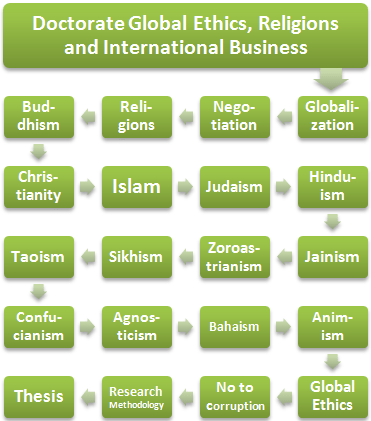
1. For all to develop a greater individual self determination; and greater understanding, tolerance and variety of responses to situations and people around us; which are all essential for our ability to interact and respond effectively throughout our lives. Cybernetics is the science of control and communication. The first law of cybernetics (Ashby’s law or the law of requisite variety) states that “The unit within the system with the most behavioural responses available to it controls the system”. Therefore global ethics knowledge and understanding is particularly important for those that “control” the system such as national leaders, governments, secret service intelligence agencies, business leader, the most wealthy, academics, religious leaders and the media.
2. Overpopulation, Rights of future generations and Climate Change.
3. Deontology states that we are morally obliged to do things. It has connections to
Kantianism: Rational beings have dignity and should be respected
Humanism: Emphasises the value and agency of humans individually and collectively. Favours critical thinking and evidence rather than dogma and superstition
On your last point i have a feeling that we might need to invoke a sort of ethical egoism where the needs of the many outweigh the needs of the few. Ethical egoism states that whatever maximises ones personal good is right, thus, to act that best further this end is one sole obligation. This is why philosophy is so subjective.
| A1 Immorality: Self interest, Desire, Greed, Ego, Common interest, Agenda, Fear, Hatred | |
| A2 Control: Acquisition, Stealing, Lobbying, Manipulation | |
| A3 Domination: Tyranny, Ownership, Oppression, Dictatorship, Slavery, Subjugation | |
| A4 Force: Weapons, Threats, Blackmail, Intimidation, Coercion, Bribery | |
| A5 Corruption: Anonymity, Secrecy, Lies, Exclusivity, Organised crime | |
| A12 Morality: Needs of the many, Selflessness, Survival, Security, Safety, Compassion, Honour | |
| A8 Strength in Numbers: Alliances, Resources, Provision, Access | |
| A9 Leadership: Authority, Credibility, Reputation, Experience | |
| A11 Trust: Information, Intelligence, Diplomacy, Cooperation, Persuasion, Truth, Knowledge | |
| A7 Decision Making: Planning, Timing, Foresight |
Machiavellian: Cynical detached worldview. Manipulativeness. Amorality. Callousness. Strategic and calculating behaviour.
Sadism: Cruel and vicious behaviour. Humiliation and hurting others to assert dominance or for pleasure.
I know of this disparity and my initial thought was to think of why is it this way? I immediately think of immorality vs morality. Morality serves the needs of the many, is selfless, provides security and safety, is compassionate, honourable and is about survival. Immorality serves self interests and is governed by desire, greed, ego, common interests, fear, hatred and involves agendas.
This is true that philanthropy and charity from individuals can save the lives of many who are victim to their situations and circumstances. The existence of charitable foundations are vital to keep awareness of and limit these avoidable tragedies in humanity. I believe that prevention is better than cure and that efforts which address the underlying issues are more powerful than addressing the effects of global inequality but this does not preclude a need for their activities. A global change in how we operate as a civilization would require deep understanding, planning, communication and cooperation to resolve the many vagaries across the planet. This is where researchers and academics have the power to change the world to influence global leaders to take effective action.
I agree in the sense that my awareness of the issue has now been made from listening to the argument and i feel compelled to follow the logic and do what is suggested. But as humans we are fickle and easily forget ideas unless we form habits which if repeated daily for around 2 months can become lifelong habits research has shown. The word “should” is perhaps incorrect in the argument because as human beings we possess agency and perhaps the moral obligation would fall on international leaders to address these problems as opposed to single individuals making single contributions which is akin to plugging holes in a sinking ship or stamping out fires as they crop up. But those who are empathetic and compassionate will be more inspired by the argument to take on this moral responsibility but as humans we are not all as caring for one another as a species. Our western world is predominantly capitalist which drives competition to achieve our goals and some may think that buying the coffee helps them succeed personally and capitalism media promotes self interest so the media plays a part. I personally believe in global systemic change to correct injustices by addressing the root causes.
The argument is sound but it relies on many individuals hearing of these premises and using understanding and compassion to act on them. A more practical way of carrying out this aid would be for government agencies to subsidise their aid programs by deducting a donation of a workers wage and indicating this on their payslip. This would assume that national leaders have knowledge of these premises and enforced them by using logic to deduce that it is right that all those employed would also use logic to deduce that it is the correct action to take. Whilst this notion would be more efficacious it removes individual agency from employees to choose what they do with their wages and that in itself becomes a moral dilemma. But clearly there is a lesser of two evils here. But this type of action does not occur explicitly but instead many western governments do provide aid to impoverished nations which is funded by tax payer money. Have the government agencies a duty to increase funding if these problems are still going unresolved? Perhaps this idea of explicitly stating that a donation from people’s wages is going to international aid would be a constant reminder of our fortunate lives?
It seems a defeatist activity for individuals to provide aid that would be sufficient enough to prevent such tragedies from continuously reoccurring without western nations explicitly changing our modes of capitalist consumption and declaring that the nation is now acting in the best interests of the entire globe. This would include addressing the many actions our societies take which cause many vagaries of civilization such as slave labour, importing goods from countries that have poor human rights records, tax evasion and ultra rich tax havens. Individual actions may be better spent in tackling these issues and holding international leaders accountable for allowing our world to operate with such immoral practices.
Effective altruism is a philosophy and social movement that advocates using evidence and reasoning to determine the most effective ways to benefit others. Altruism refers to improving the lives of others—as opposed to egoism, which emphasizes only self-interest
I agree with the sentiment provided earlier in the comments that not only money can be used to solve such issues; the donation of providing awareness and our time could be just as if not more effective. I think that the global ethical issue of climate change is the perfect storm from which to resolve many problems with international inequalities whilst addressing the existential threat of extinction having changed our planet into a potentially uninhabitable place. From a systems perspective these issues are systemic and using knowledge, foresight, planning aswell as ethical reasoning seem a more effective form of effective altruism by addressing the root causes of systemic issues.
I agree with the utilitarian and Marxist ideal of the greatest wellbeing of the greatest number and to each according to their ability to other’s needs. In the example of climate change it is true that to completely eradicate poverty might not only require a total systemic rethink on capitalism or even socialism and communism. It might use so many resources if an ineffective resolution is deployed such that our efforts may require the use of a greenhouse gas emissions budget the world does not possess and by exceeding this budget it may result in climate change making humans extinct from the planet.
It is true that aid donations can save lives but do not our very national ideals of economic growth cause many of these problems directly and indirectly. Especially when it comes to the climate change example, it is the developed world that has acted for decades in a way such that we are beginning to potentially alter the environment irreversibly and it will be the developing nations less capable of mitigating the issue, adapting to the consequences and becoming resilient to its impacts. I would take the view that greater awareness of climate change issues can bring many more minds to the resolving the issue and preparing individuals to adapt to lifestyles that are more in line with a sustainable planet to avoid a threat which could create far more poverty, illness and death to developing world populations.
I think this is a good analogy for climate change that it is developed nations that have used developing nations to fulfill our capitalist consumption habits. The effects of climate change and a nations ability to cope with them is an inequality with the moral dilemma that developed nations must act to secure a livable world for all having the greater capacity to introduce mitigating measures. But then the greenhouse gas emissions required to mitigate climate change alone might leave very little in the carbon budget to then help developing nations that will suffer the consequences of climate change. The analogy here might be that developed nations as a gang have pushed developing nations into the pond but in doing this our arms and legs have become tied and leaving us unable to directly protect the developing nations and we can only give instruction from the sidelines on how to save themselves without risking our own lives to save them from drowning as we would drown also. A very depressing thought and many empathetic compassionate people will also find this issue of great distress. But we must be strong and take the action that we can to undo what we have thoughtlessly caused.
According to a deontological view, whether something is right or not, depends not on its consequences, but on the rights and duties of those involved. Deontology focuses on what we owe.
A positive duty is a duty to do something in particular, such as looking after your elderly parents. A negative duty is a duty not to do something.
There are many ways of pursuing this ideal of not harming those in the developed world such as not buying fast fashion, buy fair trade, sustainable goods, create a startup company supplying fairtraded and ethically produced clothing or become an employee of such a company. To have sufficient impact will probably require developed nations to secure the ability to provide it’s citizens with a large enough capacity of retail clothing that is produced ethically and without harm to others, whether they are in developed or undeveloped nations.
education and self education about these type of issues can help inform individuals who for some, will not only have awareness of the implications of their lifestyles but they may act to educate themselves further to attempt to rectify the many global injustices. Those who only do the former and become aware can be ready to accept, adjust to and push for ethical governance so that they no longer become disempowered citizens complicit with the global hierarchy of domination of the rich nations over the poor.
the notion of an obligatory payment enforced by governments would be more efficacious but it also removes individual agency from employees to choose what they do with their wages and that in itself becomes a moral dilemma. But clearly there is a lesser of two evils here. I believe that what will become the more pressing issues will be to systemically redesign the global models of trade and perhaps using an ego ethical perspective to solve the problem of climate change such that those who have the capacity to act should do so and in doing so, where possible, limit harm to those less capable of preventing harm from both corrupt trade deals and the consequences of climate change.
I think the individuals focus should be on learning about what actions they take in their lives are sustainable and unsustainable for the planet and what enables these to exist in our lives such as being produced or provided to us at the expense of other nations and individuals. Living more sustainable lifestyles is a good action for people to practice but we should also be made aware that our capitalist systems do not support us in living sustainably. Citizens are expected to work 40 hours a week and this leaves little time to eat and consume sustainably which exacerbates the issue because our lifestyles and work lives make us sicker from fast food after a long days work and we are less able to achieve actions of sustainable living. Knowing that it is the system itself which blocks us from being able to live healthier and happier lives with more freedom and time is key to creating a sustainable world and that we should push for modern lifestyles which are compatible with a sustainable society that is not based on working and consuming to excess but instead having the time to adopt self care practices and more community harmony in rebuilding our societies.
my concern from a sustainability perspective is that densely populated cities will require largescale interventions to make them sustainable and therefore their growth may pose an issue. we will require more than just green growth or even degrowth to resolve these issues and even migration from rural to urban environments such as in China and India puts a greater strain on energy and food consumption that was previously more sustainable in their rural regions. But rural regions tend to be more impoverished and this is a big motivator for people to move to the city. Global population growth itself is of most concern and conversely this could possibly be more easily dealt with in city regions with better health and education.
controlled borders are ethical in some sense because they can ensure that the people crossing them will have employment and a place to live once they arrive. Otherwise this may result in them becoming subject to poverty, homelessness and in some cases be in more danger than that which they have left or escaped from. Controlled borders not only protect the sovereignty of the country itself and the chaos that could be caused by open borders but can also protect immigrants from falling into a state of unsupported living. There is a case to be made that it is a necessary evil in some cases.
I would think that the utilitarian perspective for immigration does not suffice to take into account the multiple variables that are at work when considering the wellbeing of a collective and parts of a collective. Here I think deontology ascribes to the idea that the whole is greater than the sum of its parts, to quote aristotle. It is at the intersection or order and disorder. Perhaps in an ideal world where all countries had sustainable societies whose growth was kept under control and the adequate resources and services to maintain peace within it’s own borders and there were no tensions between nations, uncontrolled borders could work. But with the deep inequalities between countries across the world and even in neighbouring countries the consequences of open borders are too unpredictable and controlled borders can protect citizens from harm that could occur if immigration was not controlled.
This argument seems too simplistic to cover the wide range of issues associated with migration such as national sovereignty, identity, security and social quality of life. Existing open borders between countries tend to have sufficient commonalities among them such that migration between the countries is without much disruption to the economic, political or social order.
This puts into perspective the emphasis on the utilitarian argument taking into account the whole system by recognizing the betterment of the wellbeing of both nations or collectives in question subjected to the immigration request. An idea of interest to me is of flexible transnationality. With the consideration of the sustainability of aviation for tourism and moving between countries it is possible that unessential flights may be subject to steep restrictions to cut greenhouse gas emissions. To avert this outcome which would cut off large swathes of the world by making continents inaccessible to the majority of populations we could use superhighways outfitted with electric vehicle charging stations to cross borders through. This could be for seasonal nomadic movements of people to conserve energy for heating and cooling and conserve water. This might be the future for transnationality which if flexible can allow migrants to access the diversity of nations and cultures around the world.
In an ideal world i would say that the argument is convincing, but the world today is both more connected and fragmented than ever before. The increasing pressures of climate change create an urgency to safeguarding populations and to also address the likely issue of climate refugees. In the future even developed nations may find that they experience water stress and adverse climate conditions and weather events such that they will be unable to support new immigrants to their nations. The argument has merit if global sustainability is achieved but until then immigration will remain a contentious issue for most nations.
While utilitarianism is concerned only with the consequences of actions, deontology is concerned only with rights and duties.
yes i think the question of how a country controls its borders is a different ethical question. but having the actual right to control borders should be upheld and choose whether to and how it is done.
Professor David Miller, a political theorist at the University of Oxford, puts the point as follows:
The public culture of their country is something that people have an interest in controlling: they want to be able to shape the way that their nation develops, including the values that are contained in the public culture. They may not of course succeed: valued cultural features can be eroded by economic and other forces that evade political control. But they may certainly have good reason to try, and in particular to try to maintain cultural continuity over time, so that they can see themselves as the bearers of an identifiable cultural tradition that stretches backward historically. [1]
cultural preservation or the case of identity can be best described in some cases as nativist preservation. This is in part because of colonialism and true indigenous or natives of a region where the argument of cultural preservation can be made ambiguous by the question of who has the right to determine the true identity or culture a land should have. The nativist term brings into the perspective the idea that long established majorities in a region that have laid claim to a swathe of land as their own are upheld and respected as their right to defend their nativist identity and culture.
Yes, i find the argument of cultural preservation convincing when framed as a nativist identity concern. The fears of a majority being marginalized due to higher birth rates of immigrating individuals is an issue of concern to many which has become a dominating theme and headline in the news over recent years. Globally we also suffer from an overpopulation issue and i suspect that interventions to stabilise birth rates to limit energy and resource consumption as we transition to a sustainable planet, will be able to facilitate the type of cultural or nativist identity preservation that is of clear importance to many a nations’ people.
I answered the question that i do find the cultural preservation argument convincing. I base my judgements on the global events of recent history and my own view of the deeply embedded cultural values that are developed as we grow up surrounded by people with similar values. These gaps between cultural identities are perhaps too large to bridge which is why we see so much segregation of intercultural identities in cosmopolitan countries like the UK and the USA. This is not to say that intercultural mixing is not a viable population demographic makeup as we see successful integration of the majority of cultures in huge cosmopolitan cities like London. But i believe it is the fear of marginalization of nativist populations that fuels the issue due to differences in birth rates of immigrants and nativists. There is a statistic which claims that it takes just a 30% minority to sway the majority into a new regime whether it be about making a decision or changing the status quo. We see this figure of 30% ethnicity currently being approached or surpassed in some UK regions such as Birmingham.
1. Examples in history and recent events relating to cultural identity preservation have demonstrated a clear trend in the nature of the human condition which in many cases sees groups of different cultures as a threat to their own cultural identity. In the worst outcomes due to this issue we see inequalities, racial tensions and even genocide. To name a few, the Jewish oppression and holocaust by Nazi Germany; the uighyrs’ (who unsuccessfully claimed independence from China in 1949) oppression and subsequent treatment deemed by many international observers as genocide; the black lives matter movement in response to the inordinate number or police shootings of African Americans; the neo nazi movement which has resulted in mass shootings like the New Zealand Mosque tragedy, plus many more. Controlled borders can help prevent such atrocities.
2. Nativist cultures have demonstrated clear resistance to immigration once it goes beyond a certain point where it becomes noticeable that new cultures are emerging and are perhaps less able to integrate, which to some view as a dilution of their own culture. Some view it as enriching.
3. Yes
4. Most developed countries accept asylum seekers.
The argument concerns state benefits such as welfare payments, health insurance and public services.
Scandinavian countries, for example, have high taxation rates to fund significant state benefits. So, if they opened their borders, large numbers of people would soon settle there to take advantage of the benefits. But this is problematic for two reasons:
- First, the arriving immigrants have not (yet) paid any tax, and so it is unfair for them to have access to state benefits.
- Second, the arriving immigrants may flood the system, causing it to break down completely.
We can state the argument as follows.
- In certain countries, significant state benefits are funded through high taxation.
- If there were open borders, many people would immigrate to take advantage of these benefits.
- This is a problem because:
- The immigrants didn’t fund the benefits, so don’t have the right to access them.
- Given the number of immigrants, the benefits system may break down, a seriously bad consequence for all.
- Therefore, in such countries, controlled borders are ethical.
This is a sound argument and a genuine concern for the stability of the economy and treasury of any country with available state benefits. It shows why immigration, when controlled, can be a protective policy for a country’s best interests. But from the utilitarian perspective as previously mentioned, by selecting a higher proportion of skilled workers for immigration such as doctors and engineers this can negatively affect the countries from which immigrants are choosing to leave. So, the consequences of this argument effects both the individuals choice of country to immigrate to, as well as their country of origin depending upon their previous contribution to the labour force there.
This debate will become ever more important with the effects of the climate emergency creating more climate refugees in the future. All nations may suffer from climate change related weather changes, but they will all occur on different timelines. By accepting the immigration of large amounts of climate refugees early on it may become a more desperate situation when the country saving people from the effects of climate change itself becomes threatened in its capacity to protect its population from climate change. It must be a decision based on long term projections and a focus must be made on adapting to, becoming resilient to, as well as mitigating climate change so that the arguments about taxation, state benefits and the rights to security and healthcare are well considered and a pragmatic approach with foresight is used.
Yes, i think controlled borders are a good measure to take because the inequalities of countries globally, especially during the unfolding climate crisis, allows a country to maintain its strength and ability to manage its society as well as protect countries that could suffer from emigrants causing a “brain drain” on their own country. With climate change occurring, requiring particularly developed countries with the greatest capacity to act, these countries must maintain their ability to protect not just their own citizens from the crisis but take actions to mitigate the dangers to countries less capable of adapting to climate change.
Greta lays out the real climate emergency in stark view of our inaction to prevent these outcomes. She critically evaluates the inadequacy of our political structures and defers to the scientists that are unequivocal in their assertions that anthropogenic climate change will have dire consequences to the planet by 2030 and this leaves very little time to act. The types of small-scale actions politicians and policy influencers are currently offering to resolve this issue are nowhere near strong enough to prevent a calamity of global proportion. Greta is absolutely right that it is the young who will not only suffer the worst consequences of inaction, but they are also unequipped and are unable to influence the direction of decision makers with a right to vote. The tone of her argument is not just about an injustice but also of the fear of not just the young, but that all should feel about this emergency and there has been a failing of the media and our institutions to convey this emergency clearly enough to move people to a call for adequate action. Her speech is moving because extinction of life on earth whilst possessing the agency to prevent it is a disparaging prospect we should attempt to avoid
Climate change affects not just ourselves but those who:
- exist far away from each of us (spatial dispersion)
- will exist a long time after us (temporal dispersion).
Who exactly is morally responsible? Particularly those who knew of the dangers and the science and were in a capacity to avert our course towards collapse, but ignored the issue because it was inconvenient for them at the time.
Do you and I have duties to future generations? I believe so yes, i believe that one purpose and meaning of life is to prevent suffering. Inaction on climate change would create untold suffering so it is our moral duty to prevent such suffering where possible.
Who should pay for climate change, and how much? Developed nations that have the greatest capacity to mitigate climate change should make the largest contributions especially since in most cases we became developed nations at the expense of not just future generations of undeveloped nations but also previous and existing populations through corrupt exploitation.
Should we care more about the continuation of humanity? We should care more about preventing the suffering of future humanity and this should mean allowing a continuation of humanity in a sustainable and controlled way.
What is presented is a very dystopian vision of the future which is not what it has to be like. In fact, i believe our existing societal structure is a dystopian one where people are uninformed, misinformed and forced into a labour market which, if living in a developed country, we become employees of a company which in most cases exploits us to generate massive profits for the shareholders and we work 40 hour work weeks and are encouraged to indulge in a consumerist society that makes us sick with high fat, sugar, salt and processed diets to cope with the suffocating reality of dealing with all the responsibilities that come with a modern lifestyle of supporting a family and keeping up with the Joneses. Life should be focussed around our wellbeing and the brain chemicals we generate from our actions such as serotonin by socialising and belonging to a community, oxytocin by being close to loved ones and dopamine by working towards progress for ourselves rather than basing our success on our progress in a company that rewards us with cash or power. My diet was plant based for 3 years.
I hope to focus my sustainability research on fluorinated gases such as cfc’s hcfc’s, pfc’s and other dangerous substances like sulfur hexafluoride which is the gas used at scale with the highest global warming potential. It is used in electric substations mainly as it is an inert gas that can prevent electrical arcing and subsequent fires and explosions. It, just like the fluorinated refrigerants, leaks from the technology that it is used in and it is lifted into the upper atmosphere via winds that mix these potent greenhouse gases and some of them have lifetimes of thousands of years. Compared to carbon dioxide and methane which have atmospheric lifetimes of a hundred of 12 years respectively, these gases have the potential to exacerbate climate change if left as strictly unregulated as they are now. The Montreal protocol and the later Kigali amendment to the protocol seeks to control these substances but a large contributor of these emissions, the USA, is as yet to sign and ratify the Kigali amendment. President Joe Biden has promised to sign the treaty within his first 100 days of office. But i still believe the measures do not go far enough and I am working on hopefully better solutions.
What would be the right or just way to distribute the burden of climate change mitigation and adaptation? Every nation and person has a duty to mitigate climate change and help their communities build resilience to and adapt to the future effects it will experience. This distribution between nations and individuals should be made according to their capacity to do so.
What, if any, are our obligations to future generations? NASA has in a recently published paper confirmed how much humans are responsible for climate change and it is with great certainty this is now widely accepted. We are responsible to minimise the suffering they may experience as a result from climate change and we may invoke the maxim of treat others in a way you expect to be treated. Therefore, we could use the perspective of being in the position of future generations and take their view that current day humanity should have acted as best it could to prevent their suffering.
NASA has now provided published evidence of how much humans are responsible for climate change. This was widely shared across recent media in April 2021. This comes after decades of attempts of scientists to convince people that this is indeed true which is the converse view in the climate dialectic of climate change deniers. Climate deniers still exist but with widespread information disseminated by respected organisations such as NASA that have studied this phenomena for decades, this should quell the misinformation about climate science.
David makes the valid point that climate science is a well-developed multidisciplinary science which requires the rigorous understanding of physics to determine the scientific bases for its conclusions. This pertains to the mitigation issue in relation to the effect of greenhouse gas emissions on the greenhouse effect which anthropogenic activities have exacerbated. What is less certain is how to adapt to these issues which requires other multidisciplinary sciences, especially the humanities and social science which are now coming together for climate change under the umbrella science of sustainability. The question of whether climate change is human caused is almost now completely resolved and evident that it is true that humans activities have caused this climate change as concluded by the recent paper from NASA in April 2021. Myself as a physicist by training and now a sustainability MSc student, i understand very well what David has said here and i can see that sustainability as a multidisciplinary subject is still in early stages of developing enough efficacy to deal with the issue.
The commons such as land and soil, waterways, oceans, the atmosphere, carbon sinks like rainforests are all vital to supporting not just local communities but can have global consequences for civilization. By my determination, i would say that the four most pressing issues for conservation are those of the atmosphere, stabilizing global population to meet the global carrying capacity, ensuring the environment protects the fertility of human beings such that safe reproduction is possible and the protection of ecosystems that support life and allow for agriculture. These are all interlinked systems that are at threat from a tragedy of the commons scenario such as polluting the land, air and sea which could lead to illness and reduced fertility aswell as remove these ecosystem services from supporting the population. Communities, if allowed, will act to support their families without thought about the longterm consequences for the capacity of the commons to support themselves in the long run and those of future generations. The ethical argument should fall on governing bodies to make necessary interventions to preserve the commons which is in the interest of everyone.
I take the view that the intergenerational responsibilities of addressing climate change are not as discrete as this argument describes but are much more interconnected because the process at some point is going to affect different generations at the same time if the path of inaction is taken. There is a blurring of the outcomes of the older generations and the younger which is being seen now as the voice of the youth expresses their fear and anger to older generations that have failed to act effectively to this threat. The idea of coercive institutions to protect the environment from climate change is perhaps better framed by an ecocide law where the polluter must pay and not only when they are charged by a community effected by the pollution, but the government should recognise these activities as harmful and automatically intervene to stop such activities. Polly Higgins was instrumental in developing an ecocide law framework, but this has yet to be adopted and it may prove vital to enforce a meaningful response to the dangers of humans using resources and ecosystems carelessly.
Yes, we have a moral obligation not just for future generations, but generations that exist now. The science is showing the potential for abrupt climate change if we do not take enough action now. This perhaps negates this argument about future generations, because in this argument, we are the future generations of this argument, perhaps for anyone younger than 75 years old. The changes that can occur in the climate can happen rapidly and from my study of the science i do believe it is possible that a transition from a relatively stable civilization to one which is dramatically negatively impacted by climate change can occur in as short a period as just five years. We owe it to ourselves to limit the suffering and mitigate, adapt to, become resilient to, and safeguard our populations from climate change. It is true that younger generations will be most affected since they will have to transition to a new operating structure of civilization with little experience of a former anthropocene era but also without knowledge of what the world was like prior to the communications technology revolution. Sacrifices are to be made by all but these mean different things to different generations.
The argument James makes is very valid in that global ethics possesses temporal dispersion. I would also take the view that the issue of climate change being framed as one of importance to future generations is somewhat misleading because the accelerating rate of change is also likely to effect not just future generations but also younger generations. I would argue that those under the age of 75 could be affected by climate change in many different ways but those who are younger will suffer from having to adapt to a world which older generations did not transition to earlier and enjoyed the comforts of not having to transform their lifestyles, even if these transformations may have in fact increased their quality of life. A view could be taken that these intergenerational inequalities have both valencies of younger generations benefitting from such transformations such that they won’t have to live the lifestyle of older generations which some perceive as being a better alternative to the transformations required, as well as older generations having missed out by not transforming to a society that in being sustainable, it serves the wellbeing of all generations.
This argument seems to be semantic and whether person A or person B are different people is irrelevant to the fact that both person A and person B have the same human rights. This is an argument with sound logic and it is true in stating that by adopting different policies such as for energy or climate policy would change the outcome of whether person A or B is born in the future.
- Polluter pays principle: those who have done the polluting should pay. Why should polluters pay? Because they have caused the harms done to our climate.
- Beneficiary pays principle: those who have benefited from past pollution should pay. Why? Even if they have not themselves caused the pollution, they have benefitted from harms done to our climate.
- Ability to pay principle: those who can pay, who have sufficient funds, should pay. Why? Regardless of whether they have caused or benefitted from the harm done to the climate, they are most able to pay for climate change.
A mixed principle of all three does seem the most ethical and efficacious argument to determine how to fund the interventions for repairing damage done to ecosystems and to protect humanity from climate change. The precautionary principle is quoted by some as implying that the polluter should pay. This mixed attribution method for who should pay is more logical and ethical and should be incorporated into an updated precautionary principle. The precautionary principle’s main argument is that if there is a perceivable threat that we should not use the lack of full scientific data to assess the threat as a reason to delay action on such a threat.
I do believe this argument is at play within the current inaction on climate change. Those that are in power such as leaders of government and business are more often than not, those in their older years, with many aged over 70 years old, a past example being Donald Trump. Research into the future orientation of an individual show that people make decisions about their current actions with a future in mind that can be motivated by a persons hopes and fears. If an older person, who perceives their deaths as occurring in the not-too-distant future, they are more likely to care more about the present rather than the future as they see no future for themselves as they may die within a decade or less. It should be our duty to recognise this facet of the human condition and ensure that power is not concentrated in the hands of just the older generations who may be wiser but may also be more self-centred in their desires for a world that suits them. It is also noted that as people get older, they often become resistant to change. Another argument which is said to motivate a person’s actions is the question “what is in it for me?”. We should not underestimate the self-centred nature of humanity.
As a 35-year-old human being living in a developed nation that is perhaps more protected from the initial effects of climate change geographically, temporally and infrastructurally, I still feel a strong urgency for agency in tackling climate change. The idea of there being no “afterlife” is abhorrent to me. Not just because we then erase all of human history but we allow younger generations to fall into a despair of climate threats that if not addressed carefully could create social, political and economic collapses or tyranny. Also, we then do an injustice to all the struggles that our past ancestors have endured to live through incredibly tough periods without the luxuries we so take for granted such as central heating, medicine, knowledge about personal health and so much more. We owe it not to just ourselves, but also younger and future generations as well as past generations that will all, and have done so, made sacrifices to survive.
yes, i think we have ethical obligations to future generations but i also feel strongly that this question is becoming somewhat outdated because i think these future generations we speak of are essentially already here. Of course, there will still be people being born every day that will form this future generations contingent but the use of the term is misleading in making the case that it will only be those who have not yet been born that will be most negatively impacted by climate change. The negative impacts could be equally as bad for people already alive to those that are yet to be born. This distinction should be made in the intergenerational dialectic and the future generations argument should be used sparingly because just as the climate projections into the future of 2050 and 2100, it distorts the potential perception of the timescales of these events. I take the view, as a sustainability MSc student, that these future generations we should be talking about are already here and that this climate emergency is rapidly taking place before our very eyes. We owe it to ourselves and to future generations to change the course of our destiny as a civilization and avert suffering.
 The Planetarian mode of civilization allows sustainability